
This story discusses the death of a child. Our thoughts are with Parker's family and everyone who loved him.
The first call came in at 10:53 a.m.
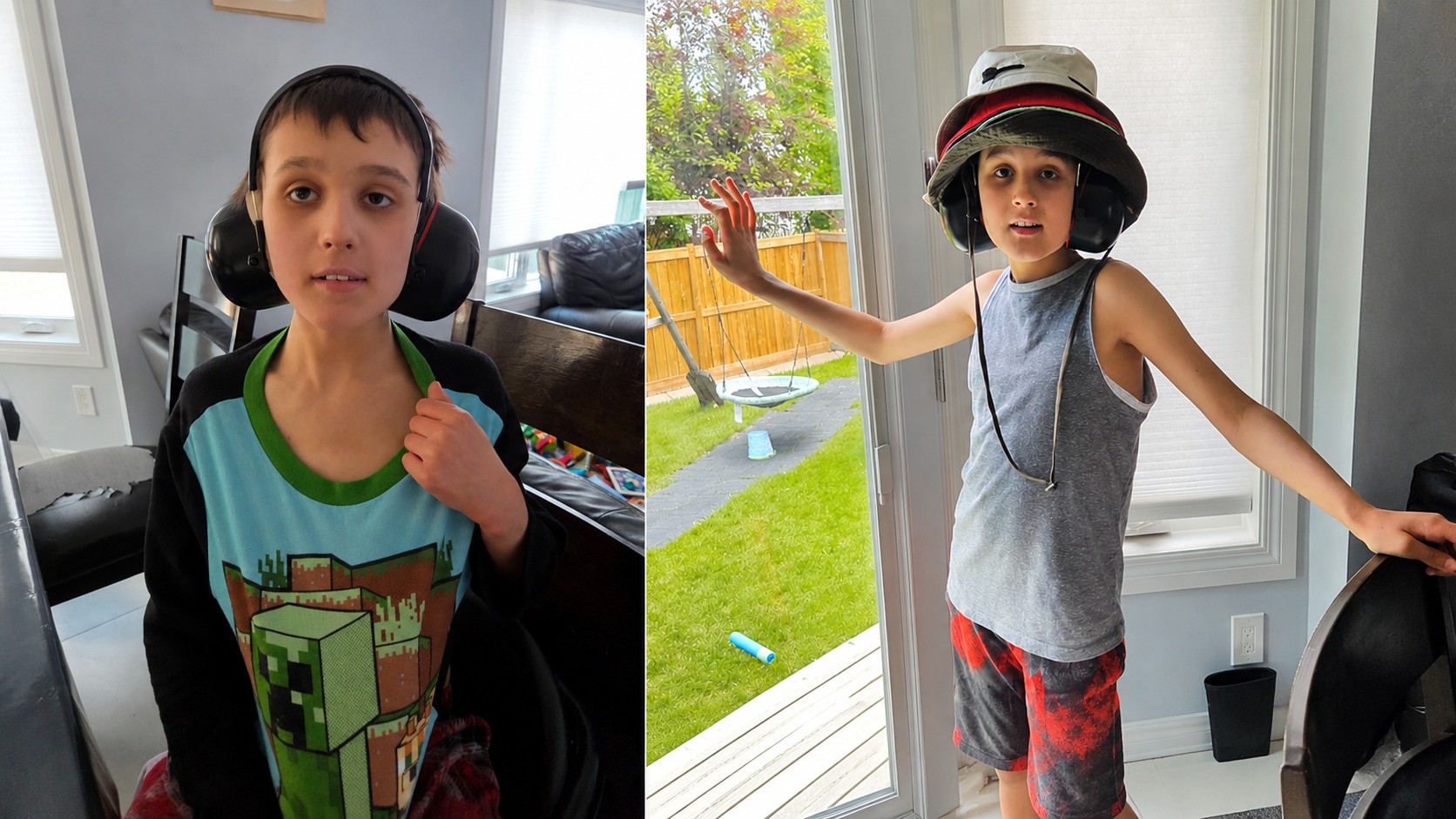
Staff at Parker Wells' Calgary day home couldn't find him. Parker was 11, autistic and non-verbal.
A Priority 1 Missing Person event wasn't created until 11:41 a.m.
Forty-eight minutes later.
A City of Calgary internal review released Tuesday found established procedures weren't followed during the two 911 calls from Parker's day home that morning.
The City concluded those failures contributed to delays in notifying police and getting a police response underway.
Parker disappeared on July 16. His body was found July 29 in a system of stormwater pipes beneath Deerfoot Trail after a search that involved hundreds of police officers, search-and-rescue personnel and members of the public.
Police have said foul play is not suspected.
The first call didn't result in a Priority 1 police event
The first call is at the centre of the City's findings.
When the day home contacted 911 at 10:53 a.m., the caller confirmed they did not want to file a missing-person report at that point and would call back if Parker wasn't found shortly.
The call was entered as an “advised event,” meaning it wasn't treated as requiring police assistance.
The City's review found there was already enough information to handle the situation differently.
Parker was an 11-year-old autistic, non-verbal child and staff responsible for him couldn't locate him.
The review found the information provided during that first call was enough to identify the situation as involving an endangered missing child and that policy called for a Priority 1 police event to be actioned.
In other words, the caller didn't need to formally declare Parker missing before the information could be acted on.
A supervisor had another opportunity to escalate it
The first call was subsequently reviewed by a supervisor.
It wasn't reopened, escalated or reassessed.
The internal review found the supervisor should have considered all the information available, particularly Parker's age and the fact that day-home staff couldn't locate him.
Then came another call.
At 11:24 a.m., the original caller contacted 911 again and officially reported Parker missing.
A Priority 1 Missing Person event was created at 11:41 a.m. — another 17 minutes later.
The review identified that delay as a potential opportunity to dispatch police earlier.

What the 48 minutes actually means
This distinction is important.
The City release doesn't establish that police officers themselves took 48 minutes to respond.
The 48 minutes measures the time between the first 911 call at 10:53 a.m. and the creation of the Priority 1 Missing Person event at 11:41 a.m.
The City's review found failures during that period contributed to delayed police notification and response.
It does not say an earlier response would have changed what ultimately happened to Parker.
The City found procedures weren't followed in four areas
The internal review identified problems involving missing-person procedures, event prioritization, dispatch requirements and event management.
But it didn't conclude Calgary 911 needed an entirely new procedure for a situation like Parker's.
The problem was applying the procedures already in place.
That is an important distinction in the City's findings: the rules existed, but they weren't followed.
Disciplinary action has been taken
The City says appropriate disciplinary action has been taken following the review.
It hasn't disclosed how many employees were disciplined or what disciplinary measures were imposed, citing confidentiality requirements surrounding personnel matters.
Iain Bushell, Calgary's director of emergency management and community safety, said the delay fell below the service expected from Calgary 911.
The City also acknowledged Parker's family and those affected by his death and said lessons from the case would be used to improve its response.
Calgary 911 has already changed how these calls are reviewed
Some changes have already been completed.
Advised events are now reviewed every 15 to 30 minutes by two supervisors rather than one.
Employees have been positioned closer to senior staff so they can get guidance and operational support in real time.
All Calgary 911 employees have also completed a mandatory review of missing-person policies, and focused team briefings covering accuracy, timeliness, critical thinking and the consequences of dispatch decisions have been completed.
Other work remains underway.
Calgary 911 is implementing spot checks and periodic call reviews through coaching mentors.
Policies and standard operating procedures are being reviewed for potential ambiguity.
Training for new recruits is being extended by one week, bringing it to 11 weeks, while additional training in critical thinking, emotional intelligence and problem solving is being developed for new and existing employees.
Enhanced training for supervisors on event reviews and escalation is also being developed.
The most important finding came from that first call
The City's review ultimately comes back to what Calgary 911 knew at 10:53 a.m.
The caller wasn't ready to file an official missing-person report.
But Calgary 911 had already been told that staff couldn't find an 11-year-old autistic, non-verbal child.
According to the review, that information was enough.
That's considerably stronger than saying the operator simply should have ignored what the caller wanted. The City's finding is that its existing procedures already provided a way to act on the information available.
Parker's case has prompted other reviews
The Calgary 911 review answers only one part of what happened after Parker disappeared.
Calgary police have also said they would review their response to the case, while the Alberta government announced a separate review of its emergency-alert processes after Parker's death.
The provincial review addresses a different issue.
Alberta's Amber Alert criteria generally require evidence that a child has been abducted and is believed to be in imminent danger.
Parker wasn't believed to have been abducted.
The province ultimately granted an exception because of the circumstances surrounding the disappearance of a vulnerable child, allowing an emergency alert to be issued about two days after Parker went missing.
That case has raised the broader question of how quickly the public should be alerted when a vulnerable child disappears without evidence of an abduction.
The family of Darius Macdougall, the six-year-old autistic boy who disappeared near Crowsnest Pass in September 2025, has also pushed for changes to the system.
What happens next
The provincial review of Alberta's emergency-alert processes remains separate from Calgary's 911 review.
For Calgary 911, some corrective measures have already been completed and others remain underway.
But the City's review has answered the central question about the first calls made after Parker couldn't be found.
The day home called at 10:53 a.m.
The Priority 1 Missing Person event was created at 11:41 a.m.
And according to the City's own review, Calgary 911 had enough information to act sooner.
Sources:
City of Calgary, findings of internal review into 911 calls related to Parker Wells, September 22, 2026; Calgary Police Service updates on the search for Parker Wells; Alberta government statements on its emergency-alert review;









Comments
Conversation