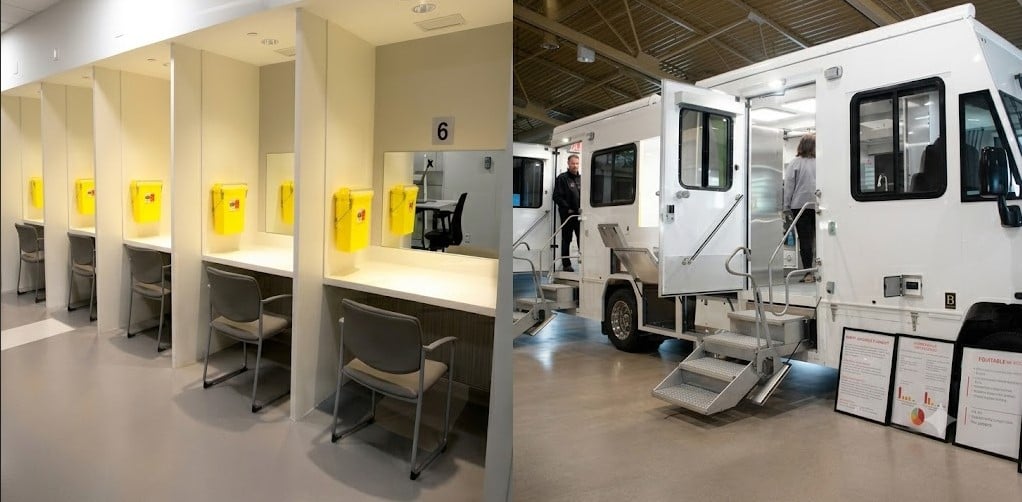
As of today, July 1, the mobile Overdose Prevention Site that has operated outside the Lethbridge Wellness Shelter since 2020 is closed. The province spent $3.8 million a year running it. That money is going somewhere else now.
The closure did not happen to Lethbridge. City council formally requested the province close the site after a 7-2 vote in December 2025, and the City sent a formal letter to the province in January 2026. The province announced the closure in March, effective June 30.
We covered the provincial closure announcement when it happened at
culturealberta.com/articles/alberta-closing-safe-consumption-sites-in-calgary-and-lethbridge-by-end-of-june.
And we covered how Lethbridge went from losing someone to an overdose every three days to going months without a single death at
culturealberta.com/articles/lethbridge-went-from-losing-someone-to-an-overdose-every-three-days-to-going-months-without-a-single.
How Lethbridge got here
Supervised consumption in Lethbridge has a long and complicated history. The original site, operated by ARCHES, was once the busiest supervised consumption facility in Canada outside Vancouver. In August 2020, the province cut ARCHES' funding following a financial scandal and the site closed. Alberta Health Services replaced it with a mobile Overdose Prevention Site operating outside the Lethbridge Wellness Shelter.
That mobile OPS, significantly smaller than the original ARCHES facility and operated by Recovery Alberta, is what closed today.
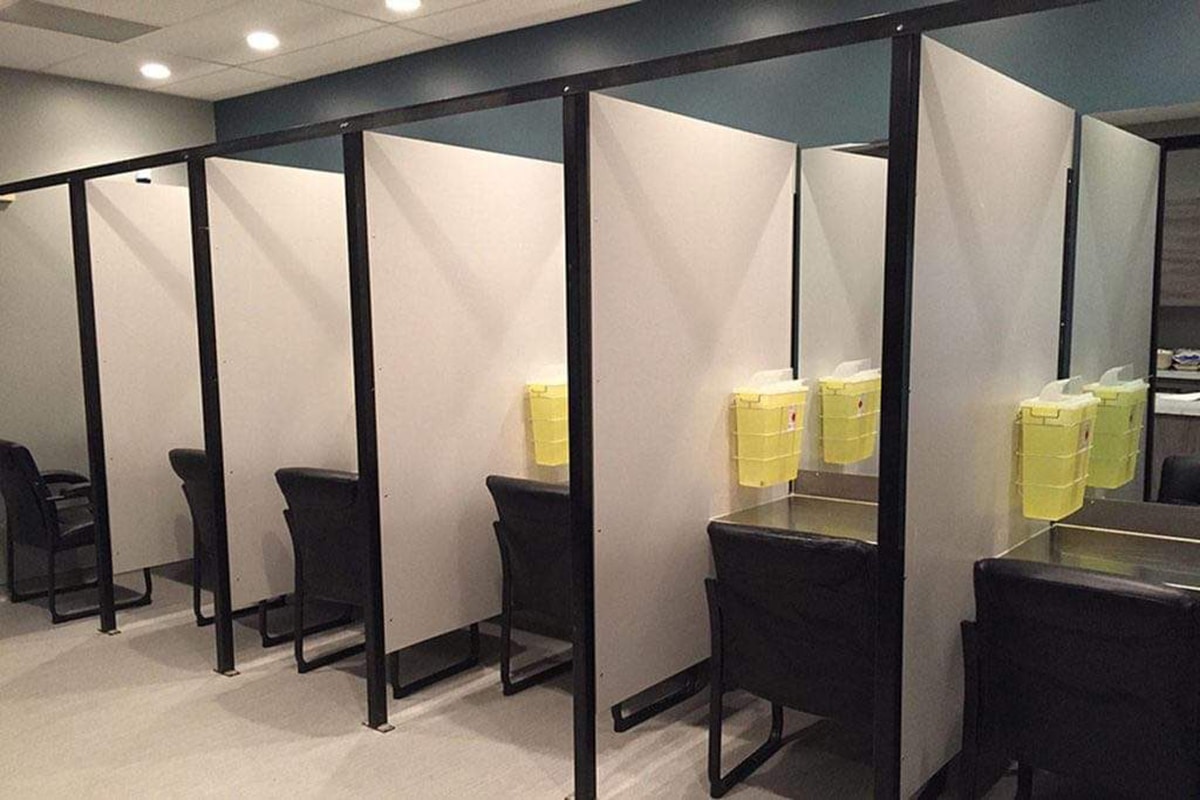
The numbers the city used to justify closure
In his March 2026 Mayor's Column, Hyggen cited a dramatic shift in Lethbridge's overdose statistics as the basis for the closure request. Since 2023, Lethbridge has seen an 89.7 percent decrease in substance abuse deaths, according to city statistics. OPS site visits dropped 91 percent from the last full year the original supervised consumption site operated. EMS averaged 33.5 opioid-related events per month in 2023. By 2025 that was down to seven per month, an 80 percent reduction.
Hyggen also cited research from the Canadian Centre of Recovery Excellence examining the Red Deer OPS closure, which he said found no increased mortality, emergency department visits, or ambulance calls after that site closed.
That research has been independently critiqued. The Overdose Prevention and Response Network published a peer-reviewed critical appraisal in March 2026 noting the CoRE study did not measure opioid-related mortality as a primary outcome, despite public statements suggesting otherwise. The appraisal also flagged conflicts of interest among the study's authors connected to Recovery Alberta that it described as inadequately disclosed.
What replaces the OPS
The $3.8 million previously spent on the OPS transitions to three replacement services based at the Lethbridge Wellness Shelter, all delivered in partnership with the Blood Tribe Department of Health.
A Rapid Access Addiction Medicine clinic a RAAM clinic operating five days a week, providing same-day assessment, medication initiation, and pathways into withdrawal management. Ten new medical withdrawal management beds enabling on-site stabilization and connections into recovery beds. A 24-hour, seven-day Outreach Recovery Response Team continuing overdose response in the community.
The Government of Alberta's Alberta Recovery Model confirms recovery communities are already operating in Lethbridge alongside these new services.
The voices that disagreed
The closure was not supported by everyone. A harm reduction wellness fair was held at the Galt Museum on June 30, the day before the OPS closed, where Lethbridge organizations offered free naloxone training and connections to service providers.
Morgan Magnuson, a registered nurse and Faculty of Health Science instructor at the University of Lethbridge, circulated an open letter calling on council to reverse the decision. "The decision was not made in the evidence base, which says we need to provide overdose prevention sites for people who are using a really toxic drug supply," she said. "What we know from talking to people who use substances is they need both. So, they need harm reduction to keep them safe when they are using and if and when they're ready to seek treatment then they should have access to that service as well."
Keltie Hamilton, a public health instructor at the University of Lethbridge, raised specific concern about Indigenous residents. A significant proportion of Lethbridge's street population is Indigenous and dealing with intergenerational trauma. "When you have those trusting relationships, it's a lot easier for people to show up to housing appointments, job appointments, all of the things they need," she said. The OPS was one of the places where those relationships were built.

What happened the last time Alberta closed an OPS
Red Deer is the closest comparison. The Red Deer OPS closed March 31, 2025 after city council there also requested its conclusion. The provincial government pointed to the Red Deer closure as evidence that closing OPS sites does not increase overdose deaths.
That claim has been disputed. Red Deer firefighters publicly said they saw more opioid-related calls after the OPS closed. The independent critical appraisal published by the Overdose Prevention and Response Network in March 2026 found the CoRE study did not actually measure opioid-related mortality as an outcome, despite public statements framing it as proof of no increased overdose deaths. The six-month window the study examined was described by independent researchers as too short to draw lasting conclusions about treatment engagement or overdose risk.
The province used that same study to justify closing Lethbridge's OPS. What Lethbridge's numbers show over the coming months will be watched closely by public health researchers, harm reduction advocates, and the communities in Edmonton and Grande Prairie whose sites remain open.
Where Alberta's supervised consumption map now stands
With Lethbridge closed today and Calgary's Safeworks Outreach at the Sheldon M. Chumir Health Centre closed June 30, only three supervised consumption or overdose prevention sites remain operational in Alberta: two in Edmonton and one mobile site in Grande Prairie. Recovery Alberta has not confirmed whether those remaining sites are expected to close.
Sources:
City of Lethbridge, Mayor Blaine Hyggen, March 2026 Mayor's Column (lethbridge.ca/news/posts/march-2026-mayors-column)
City of Lethbridge, council motion December 2025 and January 2026 letter to province
Government of Alberta, Alberta Recovery Model page (alberta.ca/alberta-recovery-oriented-system-of-care)
Government of Alberta, Supervised consumption service provider licensing page (alberta.ca/supervised-consumption-service-provider-licensing)
Overdose Prevention and Response Network, Critical Appraisal of CoRE Study, March 25, 2026 (odprn.ca)







Comments
Conversation