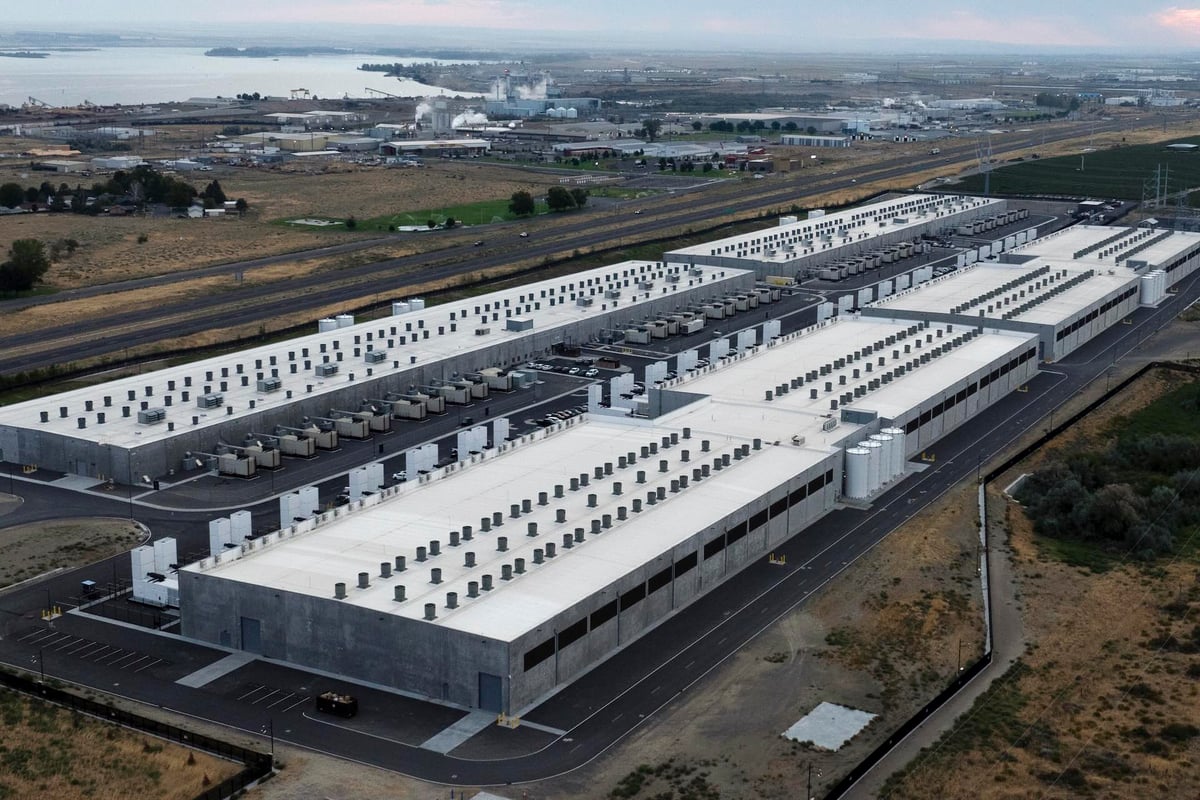
The region between Brooks and Medicine Hat is being eyed as one of the most promising AI data centre corridors in western Canada. The people who live there are mostly just finding out about it now.
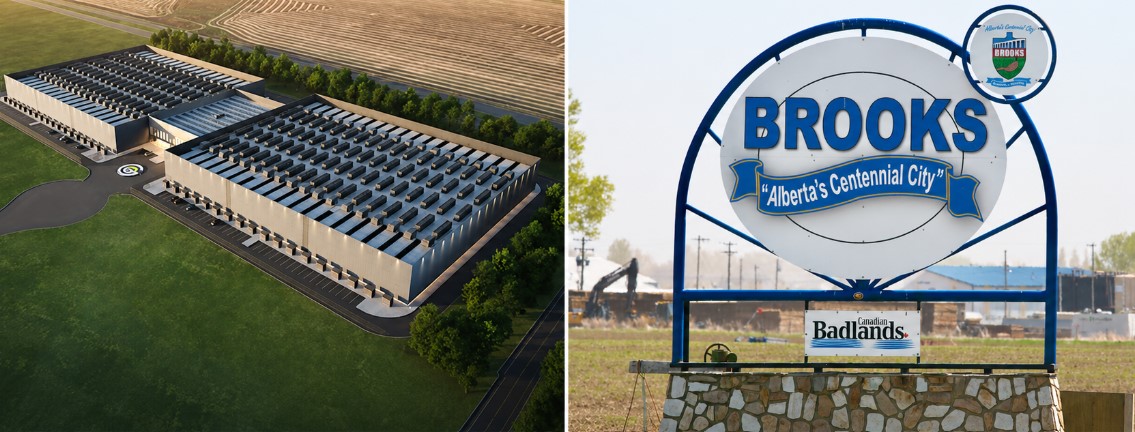
Medicine Hat already has the largest data centre in Alberta. Hut 8's 67-megawatt facility on the city's industrial side, originally built around cryptocurrency mining and now serving high-performance computing and AI workloads. A 1,200-megawatt proposal is under review in Newell County, directly between the two cities. And Brooks approved new land use rules for data centres this week after a public hearing where residents warned a facility would "kill the community."
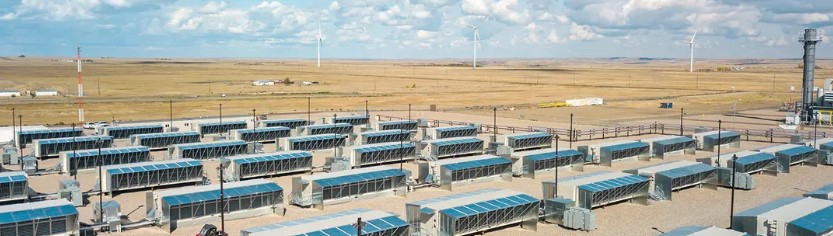
None of these decisions happened in isolation. The province has been actively courting AI infrastructure investment across Alberta for two years, and southeastern Alberta has specific advantages that are drawing attention.
We covered the Brooks story in full what happened at the public hearing, what residents said, what the regulatory gap means, and what the June 10 session will cover. Read it here: culturealberta.com/articles/brooks-alberta-approved-new-rules-for-ai-data-centres-residents-warn-it-could-kill-the-community

Why southeastern Alberta specifically
Data centres need three things above everything else: power, land, and cooling capacity. Southeastern Alberta has all three in ways urban centres do not.
The region has access to natural gas and Alberta's deregulated energy market lets industrial customers negotiate power supply directly attractive to operators who need price certainty at scale. Land is available and inexpensive compared to Calgary or Edmonton. The cooler climate reduces the energy required to cool servers, one of the largest operating costs a data centre carries.
Medicine Hat has an additional advantage no other community in the region can match. The city runs its own electrical utility one of the few municipalities in Alberta that does. That gives it direct control over industrial power supply and rates. A data centre that can negotiate long-term power pricing directly with a municipal utility is less exposed to grid volatility than one buying from the open market. It is a genuine competitive edge when developers are choosing between sites.

The Newell County proposal
The most significant proposal in the region has barely been reported publicly.
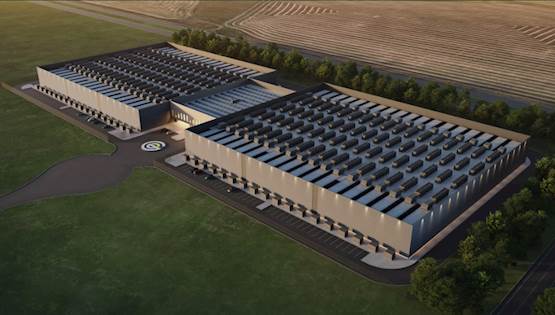
An unnamed company has been looking at constructing the Newell Data Centre in Newell County at 1,200 megawatts of capacity. For context: eStruxture's Cal-3 project under construction near Calgary billed as the largest data centre in Alberta when complete is 90 megawatts. The proposed Synapse complex in Olds that generated months of public opposition was 1,400 megawatts across ten separate facilities.
A 1,200-megawatt single facility in Newell County would be among the largest data centre projects in Canada. Its power requirements would exceed the electricity consumption of a mid-sized Alberta city. Its water requirements, depending on cooling technology, could be significant in a region that depends on the Eastern Irrigation District.
No proponent details or timeline have been publicly confirmed.
What the tax revenue argument actually looks like
The province's pitch to communities is built primarily on property tax revenue. The numbers can be compelling when they are real.
In Minnesota, a proposed 400-megawatt data centre project was projected to boost county property tax receipts by $12.8 million annually a 39 percent jump for the county. That is the scale of fiscal impact a significant facility can have for a rural community with a limited tax base.
In Alberta, data centres of 75 megawatts or greater will be formally recognized as designated industrial properties starting December 31, 2026, with land and buildings subject to municipal taxation. Alberta Municipal Affairs has told councils that assessed data centres across the province could generate over $2.2 billion in municipal tax revenue provincially if current proposals proceed.
The catch: municipalities can offer property tax incentives or deferrals for up to 15 years under the Municipal Government Act to attract development. A community that agrees to a deferral may not see meaningful tax revenue for over a decade. Whether that trade-off is disclosed publicly in the approval process is not guaranteed.
What the water question means for this specific region
The Eastern Irrigation District is the water foundation of southeastern Alberta. It covers 113,000 hectares of farmland across Wheatland, Newell, and Cypress counties and supplies water to municipalities from Brooks east toward Medicine Hat.
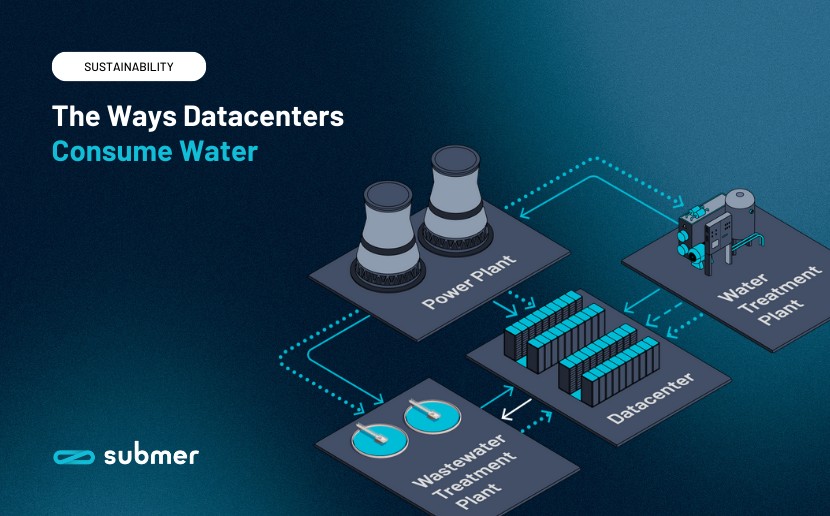
Traditional data centre cooling can consume more than 110 million gallons of water per year for a mid-size facility. Modern closed loop and liquid cooling systems use significantly less but not every facility uses newer technology, and larger facilities consume proportionally more regardless of cooling method.
What makes this region specifically vulnerable is that drought risk is real and water allocation is finite. The agricultural economy from Brooks to Medicine Hat runs on EID water. Industrial consumption at data centre scale in that watershed is not an abstract policy question. It is a direct competition with the farms and communities already drawing from the same source.
The regulatory gap nobody is talking about
In Alberta, a data centre that connects to existing grid infrastructure without requiring new utility approvals faces no automatic provincial review of water use, noise, or community impact. The Alberta Utilities Commission only gets involved when a project requires regulated utility infrastructure a power plant, transmission lines, substations, or regulated pipelines.
That means for most data centre proposals in southeastern Alberta, the only formal protection available to residents is the local land use process. Brooks just changed that process. Newell County has a proposal under review. Medicine Hat has an operating facility.
In Olds, Synapse proposed Canada's largest data centre complex and the AUC rejected the initial application in March 2026 not on the merits, but because the application was technically incomplete and lacked sufficient community consultation. Synapse reapplied in April. The process continues.
Olds had AUC involvement because the proposal included a gas-fired power plant. A facility that avoids that trigger bypasses provincial oversight entirely. The municipal bylaw is the last line.
The June 10 session in Brooks is open to everyone in the region
A public information session called Connected Communities runs June 10 from 6 to 8 p.m. at the Heritage Inn Hotel and Convention Centre in Brooks. Presenters include a city representative, representatives from Ascent Energy and Corvus, and a representative from eStruxture whose Cal-3 data centre is under construction near Calgary.
The session is open to residents and media from across the region. No registration required.
The questions about water allocation, cooling technology, power draw, tax revenue timelines, and noise mitigation are the same whether you live in Brooks, Medicine Hat, or Newell County. This is the first public forum in southeastern Alberta specifically designed to answer them.
For the full Brooks story, visit culturealberta.com/articles/brooks-alberta-approved-new-rules-for-ai-data-centres-residents-warn-it-could-kill-the-community
Sources:
Brooks Bulletin, Data centre would kill the community, says resident, June 3, 2026 (brooksbulletin.com)
Medicine Hat News, Information session in Brooks will offer answers on data centres, June 2, 2026 (medicinehatnews.com)
Baxtel, Alberta Data Centers directory, Hut 8 Medicine Hat (baxtel.com)
Government of Alberta, Build your AI data centre in Alberta (alberta.ca)
University of Calgary Sustainability, Will AI Data Centres Raise Water and Power Use in Alberta, May 2026 (ucalgary.ca)
Alberta Utilities Commission, Lauren Aspden spokesperson statement, June 2026
Lexpert, Alberta government to implement levy framework for large-scale data centres, August 2025 (lexpert.ca)
Culture Alberta, Brooks Approved New Rules for AI Data Centres, June 2026 (culturealberta.com)








Comments
Conversation