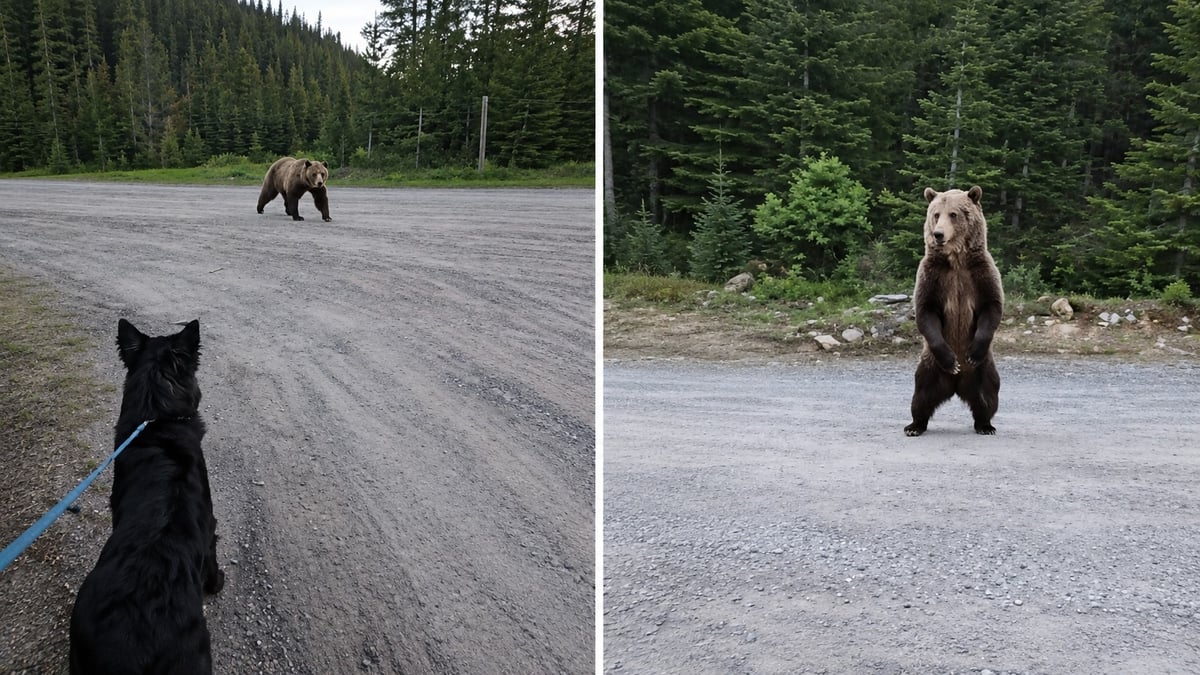
A woman and her dog were followed and repeatedly charged by a grizzly bear on an Alberta trail this week. The video has been seen by millions of people.
The footage shows the woman slowly backing away while the bear tracks her at close range. Her dog stays tight to her side, glancing back at the bear as the woman repeats firmly "No. Go away. Stop it. Enough." At one point the bear stands on its hind legs, showing its full size. It circles, stalks, and charges multiple times before eventually disappearing into the bush.
Nobody was hurt. A friend posted the video on Instagram with one specific message: carry bear spray when you hike in bear country.
The encounter happened on June 24 near Mount Engadine Lodge on Rummel Lake Trail in Spray Lakes Provincial Park, Kananaskis Country. Alberta Parks issued a bear warning for the area the same day.
What she did right and what was missing
She did not run. She kept facing the bear. She backed away slowly and used a firm, loud voice throughout. Those are the right moves. Retired Alberta conservation officer John Clarke, who runs the Canadian Bear Safety Authority, told CBC earlier this year that bears will do one of four things when they encounter people: run away, stay put, climb a tree, or follow you. "The only thing you have to worry about is if it follows you and why are they following you?"
What was missing was bear spray. Her friend made that point explicitly in the Instagram post. Bear spray is the most effective tool available in a bear encounter more effective than a firearm, according to research and it needs to be on your hip in a holster you can open in under two seconds. In a pack or chest pocket it is useless when you actually need it.
What the video actually shows
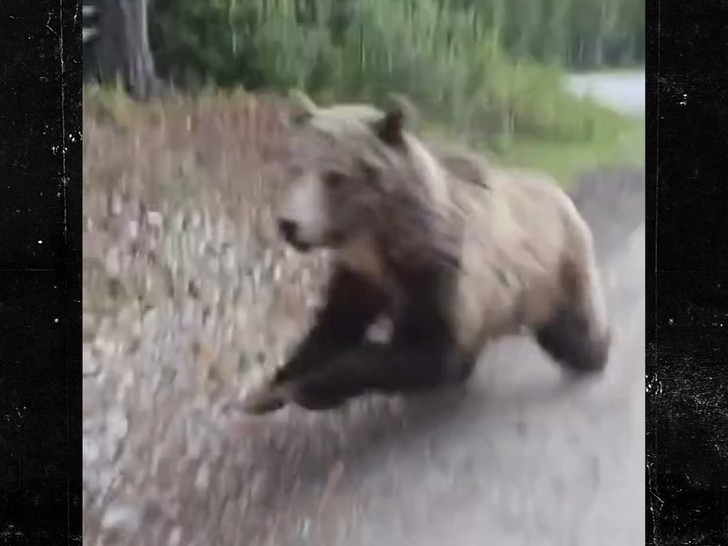
What the bear does in this video is consistent with a bluff charge a defensive behaviour where the bear charges but stops short of contact. It is not a predatory attack. The bear charged multiple times without making contact, which is the pattern. A bluff charge means the bear feels threatened and wants you to leave. Slowly backing away, as the woman did, is exactly the right response.
A predatory attack looks different deliberate, silent, sustained. If a bear makes contact in what appears to be a defensive attack, the advice is to play dead: face down, hands protecting your neck, legs spread to make it harder to flip you over. If the attack continues and shifts to predatory behaviour, fight back as hard as you can.
Alberta's grizzly situation this summer
This video did not come out of nowhere. Kananaskis has been active all spring and summer. Alberta Parks issued bear warnings for the area around Mount Engadine Lodge and Rummel Lake Trail directly in connection with this encounter. A family of four grizzly bears has also been frequenting a nearby campground — one camper was forced to use bear spray after a grizzly tore through their tent, and Alberta Parks subsequently banned tent camping at two campgrounds, permitting only hard-sided campers.
In May, a grizzly bluff charged a hiker near the popular Troll Falls trail in Kananaskis Country, triggering a provincial bear warning covering Bow Valley Wildland Provincial Park and the Evan-Thomas area. Days later a second bluff charge on Mount Shark Road near Canmore led to additional closures. In June, a grizzly was found illegally shot and left along Highway 734 near Sundre Alberta Fish and Wildlife is investigating.
Alberta is home to an estimated 800 to 1,000 grizzly bears. Grizzly hunting has been banned in the province since 2006 and the species is listed as threatened. Activity is typically highest in spring and early summer as bears come out of hibernation and search for food, and again in fall as they build up fat before winter.
Kananaskis, Banff, and Jasper all see elevated bear activity compared to more remote areas because the animals are habituated to human presence. "Bears that are in K-Country, Banff, Jasper, they can see up to 200 to 300 people on a weekend," Clarke told CBC. Habituation does not make them safer it makes encounters more likely.
Before your next hike
Bear spray on your hip, not in your pack. Make noise on the trail. Keep dogs on a leash. Travel in groups when possible attacks on groups of three or more are extremely rare.
To report a bear encounter in Alberta's provincial parks and Kananaskis Country call Alberta Parks at 403-591-7755.
Sources:
CBS News, Facebook post confirming Alberta location, June 26, 2026
Alberta Parks, bear safety guidelines (albertaparks.ca)
Canadian Bear Safety Authority, John Clarke statements to CBC, May 2026





Comments
Conversation