
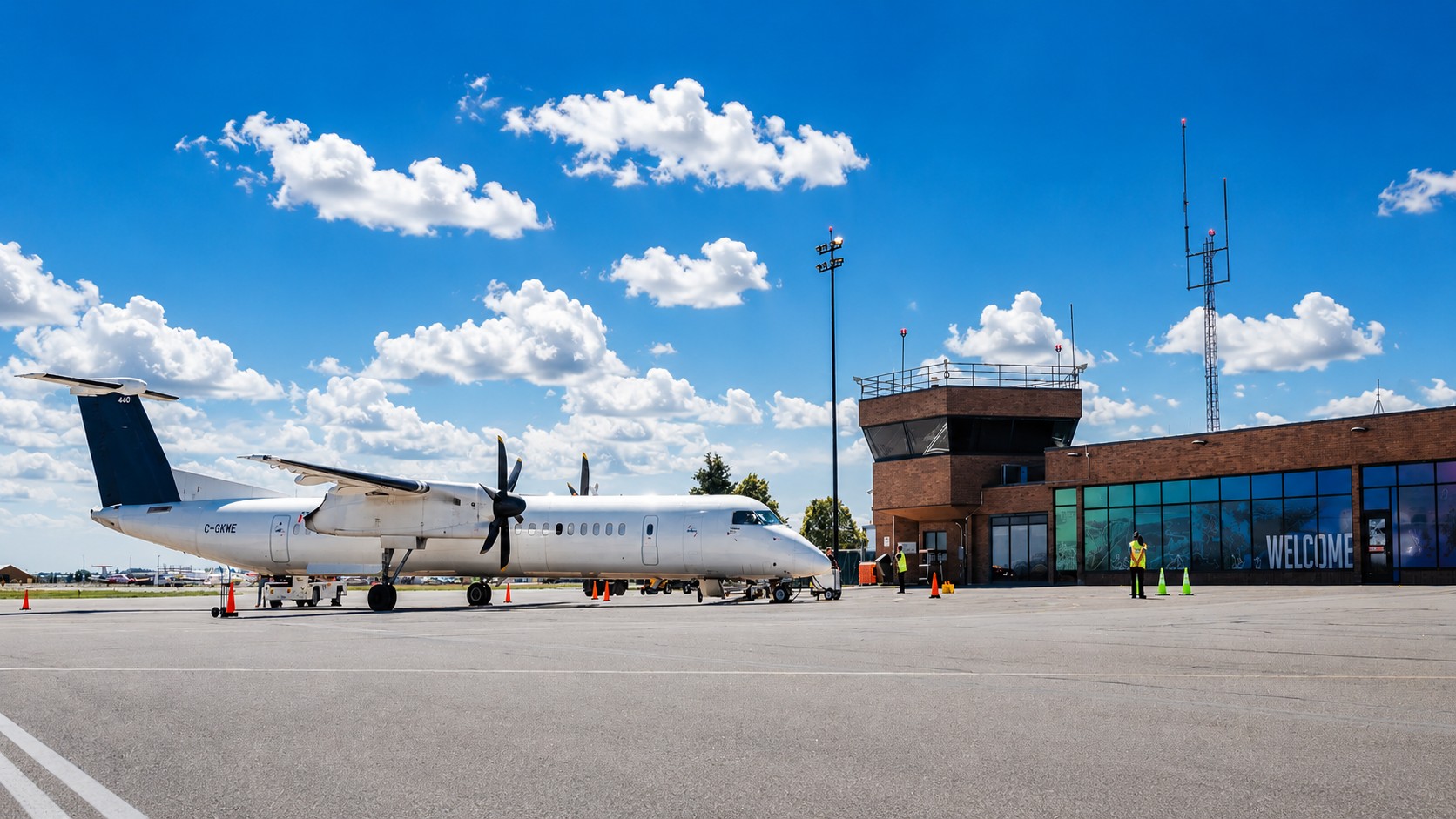
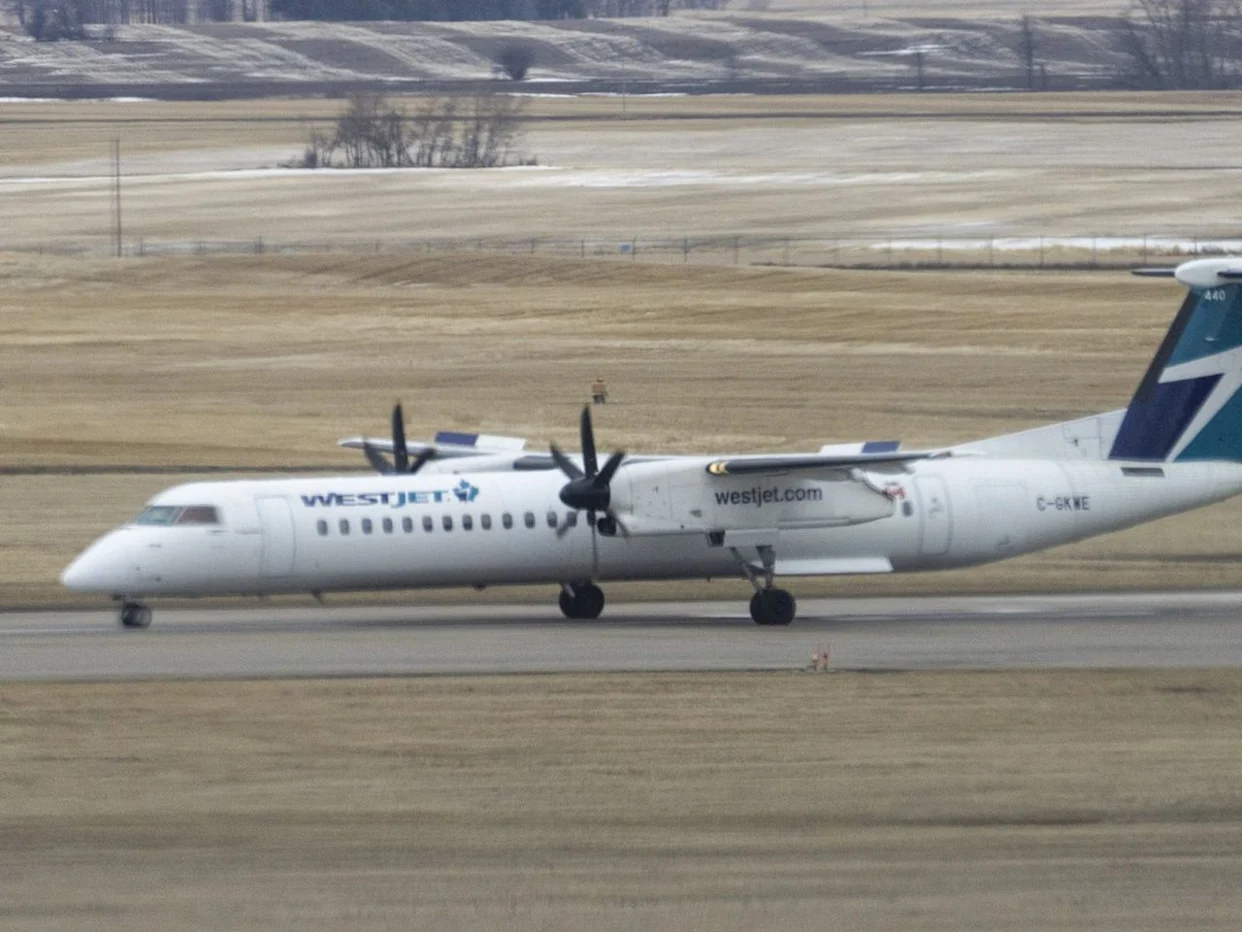
Just before 10 a.m. on Wednesday, WestJet's Q400 aircraft taxied down the runway at Medicine Hat Regional Airport and flew to Calgary for the last time. No one was there to replace it.
WestJet announced in February it was ending its Medicine Hat and Lethbridge routes as part of a strategic overhaul of its 2026 schedule, citing insufficient demand. The airline began Medicine Hat service almost exactly eight years ago on June 22, 2018, with a Saab 340B aircraft. It later upgraded to the larger Q400. On the day it left, WestJet announced it ranked seventh globally and first in North America for on-time performance in May.
For Medicine Hat, the timing could not feel worse. City administration and elected officials say they have been scrambling to find a replacement for months. They have contacted 22 airlines. None has committed.
What this costs Medicine Hat
The numbers are not abstract. The Medicine Hat Regional Airport contributes approximately $16.7 million annually to the city's GDP and supports 135 jobs. About 60 percent of airport revenue was tied to WestJet's operations. With that revenue gone, the airport is now projecting a near $500,000 annual deficit.
The airport still has significant activity last year it recorded 37,000 total air traffic movements, a 30 percent year-over-year increase, driven by private aviation, flight training, charter, and medevac operations. HALO Air Ambulance is based at YXH. The airport completed 4,400 interfacility medevac transfers in the past five years. Core operations continue. But the terminal built for passenger service is now sitting quiet.
"We still have to operate our airport to a high standard for regulatory compliance reasons. The snow still needs to be plowed, the grass still needs to be cut, we have to run a compliant safe facility," said Logan Boyd, Medicine Hat Regional Airport manager.
The demand is real the carrier is not
The city's own data makes clear this is not a lack of demand problem. The region generates about 705,000 air trips annually within 150 kilometres of Medicine Hat and roughly 379,000 within 60 kilometres. In a recent survey of more than 700 residents, 94 percent said local air service is important to them. In 2019, YXH served about 75,000 passengers a year with roughly 50 flights per week.
The problem is economics. Regional air routes in Canada have been losing money for years. Fuel costs, staffing shortages, and thin margins on short-haul flights have pushed carriers away from small city routes across the country. WestJet described the Medicine Hat and Lethbridge routes as insufficiently profitable despite efforts to support their viability.
What Medicine Hat is now trying to prove to any carrier willing to listen is that a provincial underwriting model changes that math.
What July 6 means
The Government of Alberta has issued a Request for Expressions of Interest seeking carriers interested in providing scheduled regional air service across Alberta. Submissions are due July 6, 2026.
The RFEOI is not a Medicine Hat-specific process. It is a province-wide call covering all underserved regional routes in Alberta. The plan is for the province to underwrite airlines that agree to operate regional routes, reducing the financial risk that has historically driven carriers away from markets like Medicine Hat and Lethbridge.
The province told CBC News it views WestJet's departure as disappointing and said southern Alberta will remain connected, but has not publicly committed to specific funding levels or a timeline for service restoration.
Medicine Hat is positioning itself as a ready partner. "Medicine Hat is exactly the kind of community the process is designed to serve, and the City is pursuing it actively," the city said in its release.
How Medicine Hat compares to other small Alberta cities that lost air service
Medicine Hat is not the first Alberta city to lose its only commercial carrier and not the first to try to get it back. Grande Prairie lost WestJet regional service in 2020 during COVID and eventually rebuilt passenger service. Fort McMurray has maintained service partly because the oilsands industry subsidizes route economics that would not otherwise work on passenger demand alone.
The cities that have successfully restored service share one thing: they made the business case in hard numbers rather than civic pride arguments. Passenger surveys, GDP impact studies, corporate travel demand data, and a clear provincial underwriting commitment are what move carriers. Medicine Hat has those numbers. The $16.7 million GDP contribution, 705,000 regional air trips, and 94 percent resident support are exactly the data package a carrier needs to take a route proposal to its network planning team. Whether a carrier responds to July 6 is the question.
What residents are dealing with right now
For Medicine Hat residents who need to fly, the options are now the same as they were before WestJet arrived in 2018: drive to Calgary.
The drive from Medicine Hat to Calgary International Airport is approximately 295 kilometres and takes roughly three hours in normal conditions. That is the trip every Medicine Hat resident needing to catch a connecting flight will now make until a replacement carrier is found.
The disruption extends beyond residents. Visitors to Medicine Hat from outside Canada are facing the same calculation. Jude and Marjorie Jonas, visiting from London, England, told Medicine Hat News the change had already affected their travel plans. "Now we will have to drive down to the nearest airport, which is Calgary, just to find a way from Medicine Hat," said Jude. "This will limit us coming here."
For the city's business community it raises questions about how Medicine Hat markets itself as a place to invest when the nearest commercial airport is three hours away.
What comes next
The July 6 RFEOI deadline is the next meaningful moment in this story. After that, the province reviews submissions and begins negotiations with interested carriers. No timeline has been given for when service could realistically resume.
Boyd told media the city is optimistic about the airport's future and expects the terminal to see increased charter traffic. Administration says conversations with carriers are ongoing.
For updates on the replacement carrier search visit medicinehat.ca or follow the City of Medicine Hat's official channels.
We covered the WestJet departure from both Medicine Hat and Lethbridge when it was announced at culturealberta.com/articles/westjets-last-flights-out-of-lethbridge-and-medicine-hat-are-june-24-neither-city-has-a-replacement.
Sources:
City of Medicine Hat, Medicine Hat moves to restore scheduled air service, June 2026 (medicinehat.ca)
Medicine Hat News, WestJet flies out of YXH for final time, June 25, 2026 (medicinehatnews.com)
Medicine Hat News, WestJet's last local flight in June, February 25, 2026 (medicinehatnews.com)
CBC News, WestJet no longer flies to Medicine Hat and Lethbridge. What's next, June 24, 2026 (cbc.ca)









Comments
Conversation