David Lachance Donald remembers the room from middle school.
Three wooden altars. An antique grandfather clock. Black-and-white photographs of graduating classes going back generations, and French-language panels explaining how the Missionary Oblates of Mary Immaculate founded the school in 1908.
When he enrolled at Campus Saint-Jean, he went looking for it.
"It was very nice because they showed off the history of the francophone community, how the university started," Lachance Donald, now 23 and in his third year of political science, told the Globe and Mail. "And then when I started attending Campus Saint-Jean, I couldn't find that room any more."
The Salle Onésime Dorval was refurbished during campus-wide renovations in 2023. A carved brick mural from the 1990s was permanently covered around the same time. The room is currently being used as open-plan offices, with further renovations planned.
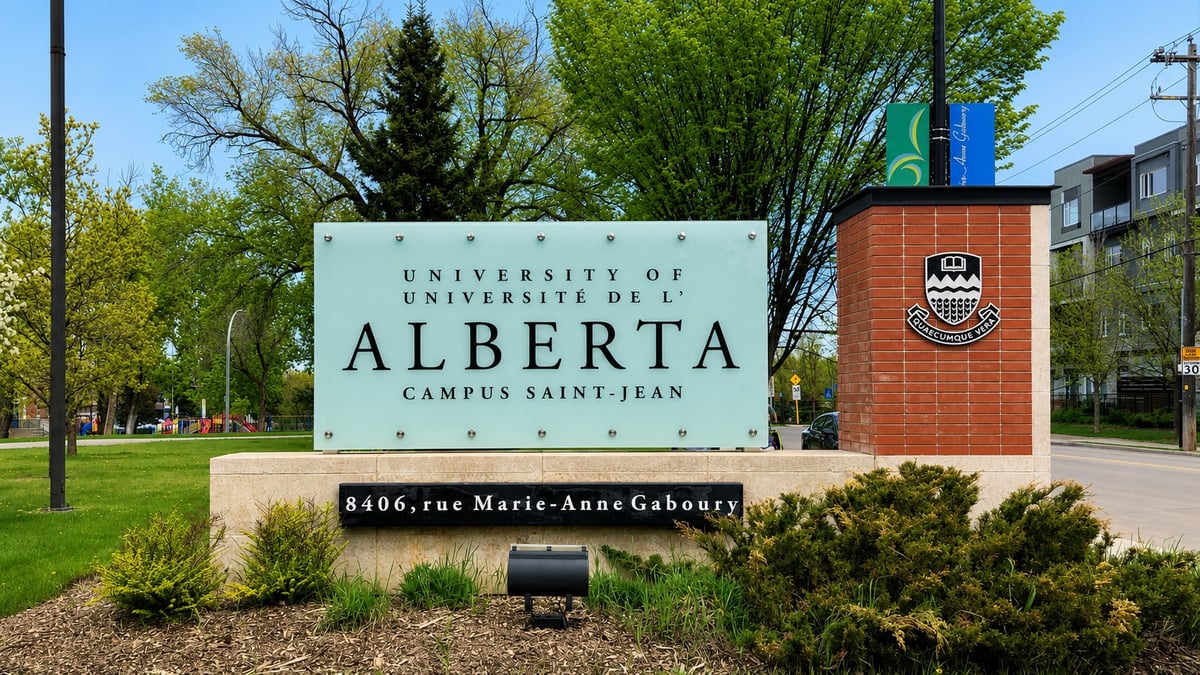
Three years later, those changes sit at the centre of a dispute that has produced a series of open letters, a boycott of the campus's strategic planning process, and legal action against the university.
Who's arguing
On one side: the Association canadienne-française de l'Alberta, the Société historique francophone de l'Alberta, and a collective of eight former Campus Saint-Jean professors and their supporters.
On the other: Jason Carey, who became dean in 2022. A mechanical engineer by training, a native French speaker, and a U of A professor since 2004.
The francophone organizations say the campus is erasing their history without proper consultation. Carey says the changes are necessary acts of reconciliation and decolonization at a campus whose population is increasingly diverse.
Why the ACFA isn't just a community group
When the Oblates sold what was then Collège Saint-Jean to the University of Alberta in 1976, the religious order, the university and the provincial government signed an agreement promising to guard the francophone character of the school.
In 2019, the Oblates delegated their role in that agreement to the ACFA.
So when the ACFA objects to changes at Campus Saint-Jean, it does so as a party to a fifty-year-old agreement about what the institution is supposed to be. The organization is now pursuing legal action against the University of Alberta over the campus.
Carey has cited that litigation as a reason he can't consult with them. "Due to the legal action the ACFA is pursuing against the University of Alberta in relation to Campus Saint-Jean, it would not be appropriate for the University to engage on matters that are the subject of litigation, which limits the possibility of collaboration and consultation directly with the ACFA, a situation we regret."
The letters
On June 11, the Société historique francophone de l'Alberta wrote to say it would not participate in individual consultations for the campus's 2027-2034 strategic plan. Its president is Claudette D. Roy, a Member of the Order of Canada.
Carey replied the next day, and opened by noting the date the letter arrived. June 11 is the anniversary of the 2008 federal apology to former students of residential schools.
"Our institution has a responsibility to be a space of absolute openness, capable of welcoming every student, regardless of their background, origins, or identity, so that they feel fully respected and safe within our walls," he wrote.
Then he set out why the campus considers the history contested rather than settled.
"We find it difficult to envision strategic planning for the future without fully acknowledging the historical links, now documented, between certain members of the Saint-Jean institution's staff and the Indigenous residential school system."
The ACFA published its own critical letter on July 8. Carey responded to that one too.

The Oblates and the residential schools
The Missionary Oblates of Mary Immaculate founded Campus Saint-Jean in 1908. The same order operated a large share of Canada's residential schools.
The campus has been direct about its reasoning. In its published account, it says that as part of its decolonization process, the existence of a room where the history of the Oblate presence in Alberta was not presented in a pedagogical and objective manner was a major obstacle to reconciliation.
The University of Alberta's Indigenous strategic plan, Braiding Past, Present and Future, calls for safe and welcoming physical and virtual spaces for First Nations, Inuit and Métis students, faculty, staff and community members.
On June 13, 2023, campus staff and francophone community organizations were invited to a pipe ceremony marking the official start of the campus's reconciliation and decolonization journey, held in consultation with the Bent Arrow Traditional Healing Society.
The campus rejects the word erasure
"Clearly, in this framework, there is no erasure or destruction of Alberta's francophone heritage, and no opposition between the process of decolonization and the preservation of francophone historical heritage," the campus states.
"Alberta's French-speaking community is alive, plural and in constant transformation. Reducing its historical heritage to a small number of religious objects does not reflect this plurality."
The campus says it wants to represent the Franco-Albertan story and the diversity of its history, that intangible heritage matters alongside physical objects, and that it is in contact with cultural associations about how to present it. The Salle Onésime Dorval, it says, will continue to serve as a multi-purpose space for teaching, research, continuing education and community events.
What consultation happened
The campus published its own timeline.
A general assembly on August 31, 2022, presenting the year's vision and priorities including space planning and renovations. A dean's brunch on September 25, 2022, presenting the campus's inclusive vision. A Congress on Inclusivity on March 31, 2023, with community members present. Consultations in spring 2023.
The francophone organizations say that wasn't adequate consultation on the specific decision to dismantle the room and cover the mural.
The student's actual argument
Lachance Donald is Franco-Métis. He runs the University of Alberta's Powwow Dance Club.
He isn't defending the room as it was. What he wanted was the residential school context added to it.
"There's no denying how much damage was done from the Oblates de Mary Immaculate," he told the Globe. The Franco-Albertan community, he said, is keen to move forward with reconciliation.
"But it feels like the university is kind of blocking that out by making unilateral decisions on the part of reconciliation."
Growing fast while this happens
Campus Saint-Jean had roughly 650 students in 2022. Last year it had nearly 1,240. It expects at least 1,500 this fall.
Much of that growth comes from francophone international students, driven by federal policy. Ottawa has been working to shore up francophone minority communities outside Quebec by encouraging French-speaking international students to study at institutions like this one.
Last month, Immigration Minister Lena Metlege Diab announced the government would extend by a year a pilot project offering a fast track to permanent residence for French-speaking students from countries where student visa rejection rates are high. IRCC has also funded a navigator service for French-speaking students at the campus, a $1.58 million agreement running from November 2024 to March 2028.
That growth is the basis of Carey's argument about a more diverse population. For the francophone organizations, it's part of what makes the question of institutional character urgent.
2027
The Faculté Saint-Jean turns 50 that year, and the strategic plan under dispute covers 2027 to 2034.
Carey has framed the anniversary as a chance to celebrate the campus's academic achievements while honouring its duty to remember, and says decisions about spaces and heritage will be guided by a commitment to truth, decolonization and contemporary ethical protocols.
The planning process continues without the SHFA. The ACFA's legal action proceeds, which by Carey's own account limits consultation with the organization holding the Oblates' role under the 1976 agreement.
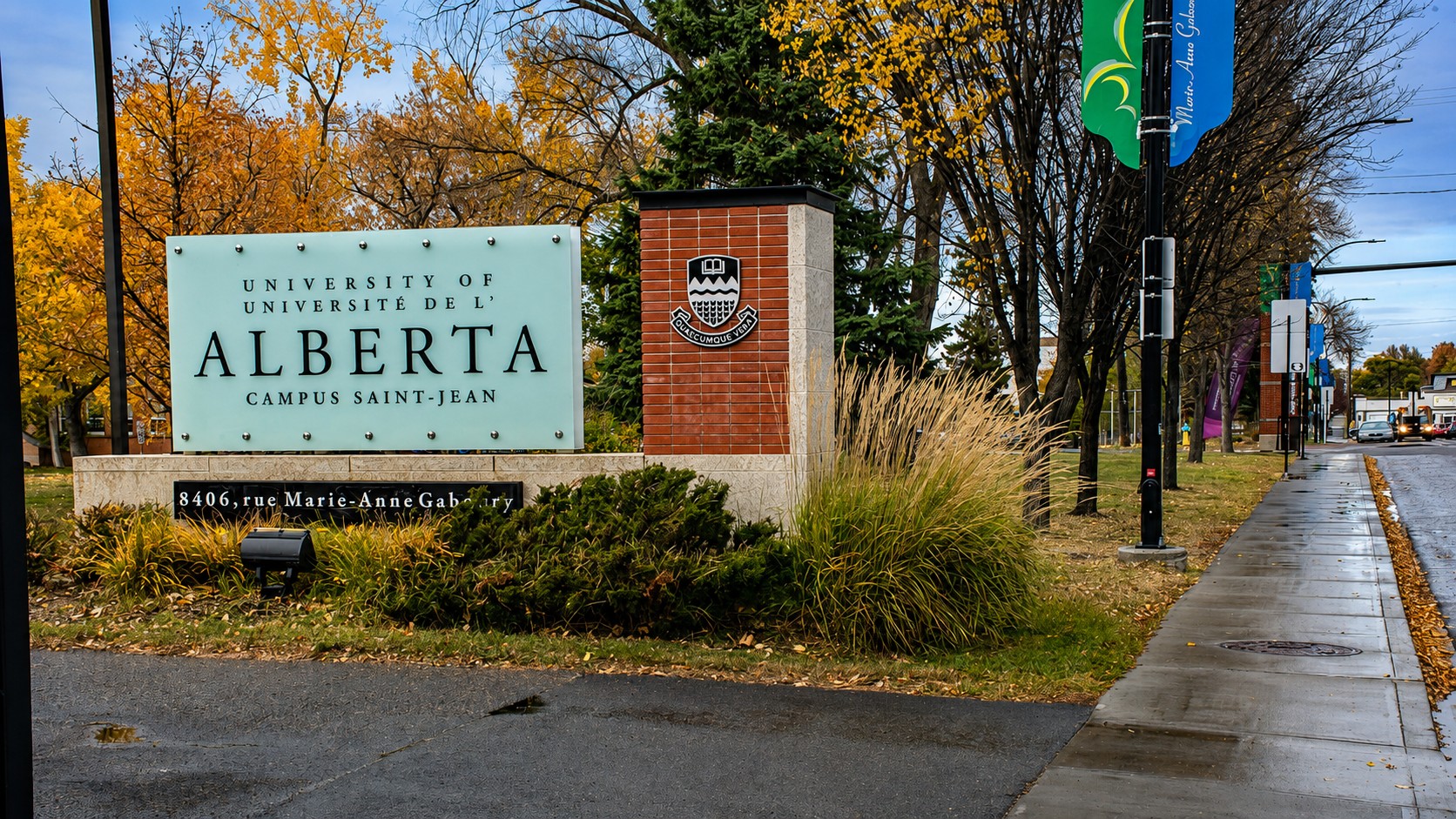
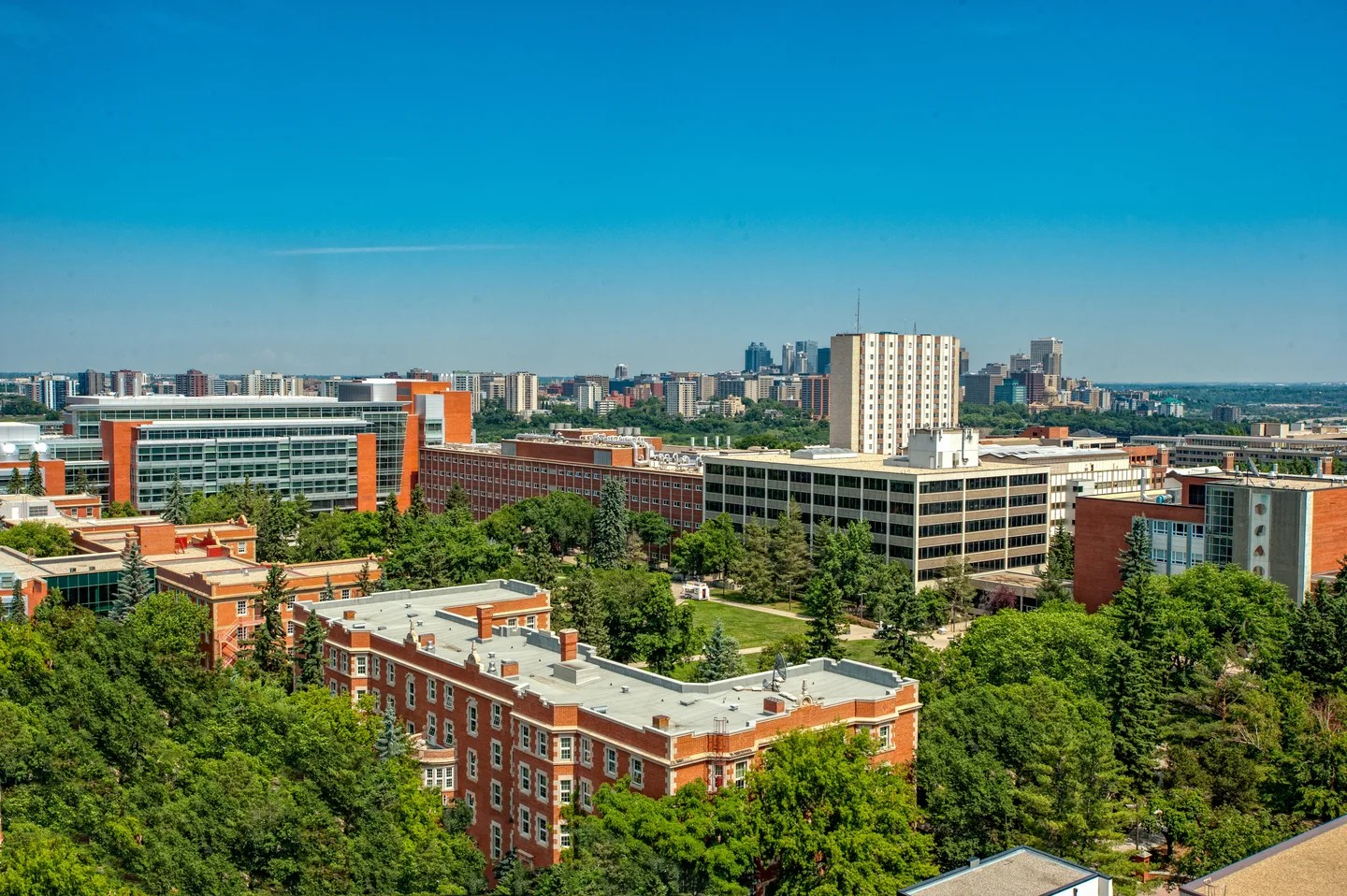
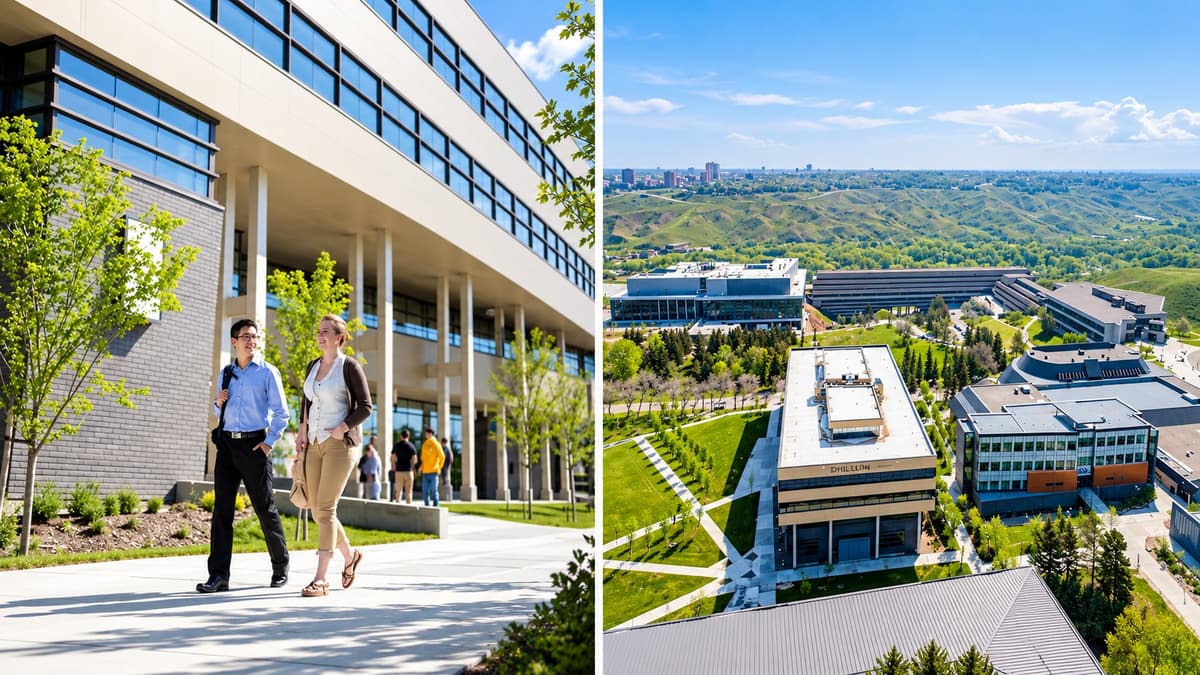
Campus Saint-Jean remains the largest francophone postsecondary institution west of Winnipeg, in Bonnie Doon, across from La Cité francophone.
Sources:
The Globe and Mail, "Alberta francophone community, university at odds over changes to Edmonton's Campus Saint-Jean," August 2026
Campus Saint-Jean, open letter from Dean Jason Carey to the President of the SHFA, June 12, 2026: https://www.ualberta.ca/en/campus-saint-jean/news/2026/june/loshfa.html
Campus Saint-Jean, response from the Dean to the open letter of the President of the ACFA, July 2026: https://www.ualberta.ca/en/campus-saint-jean/news/2026/july/repdoyenacfa.html
Campus Saint-Jean, "Campus Saint-Jean is evolving": https://www.ualberta.ca/campus-saint-jean/about/evolution.html
University of Alberta, Braiding Past, Present and Future
Immigration, Refugees and Citizenship Canada, Francophone Immigration Support Program grant record




Comments
Conversation