Six of the seven cheapest places to rent in Canada are in Alberta.
The Rentals.ca and Urbanation National Rent Report for June 2026, covering May 2026 data, confirmed it again. Fort McMurray, Lloydminster, Medicine Hat, and Red Deer took the first four spots among 25 markets analyzed outside Canada's six largest cities. Grande Prairie came sixth. Lethbridge came seventh. The only non-Alberta city to crack the top seven was Regina at $1,406, squeezed in between Red Deer and Grande Prairie.
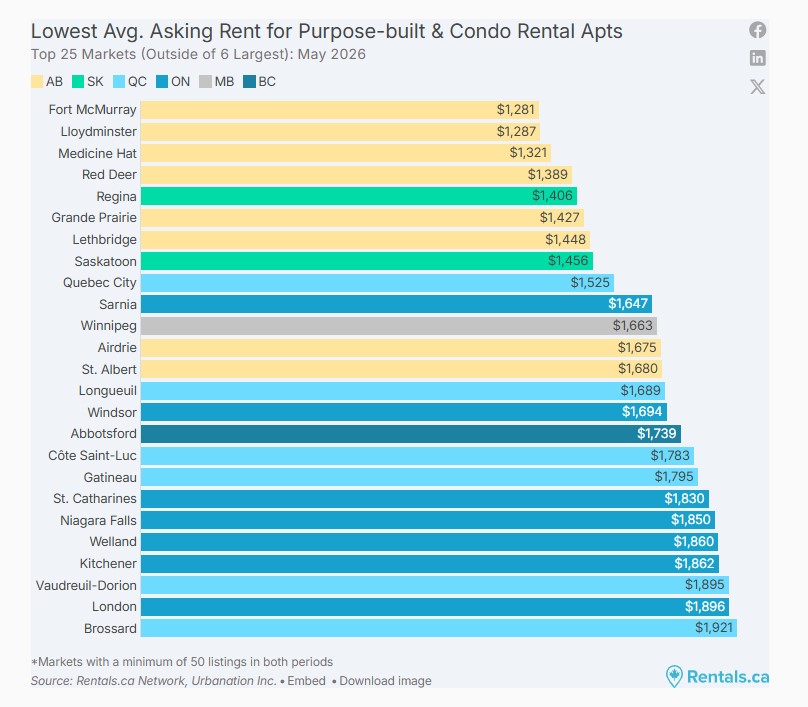
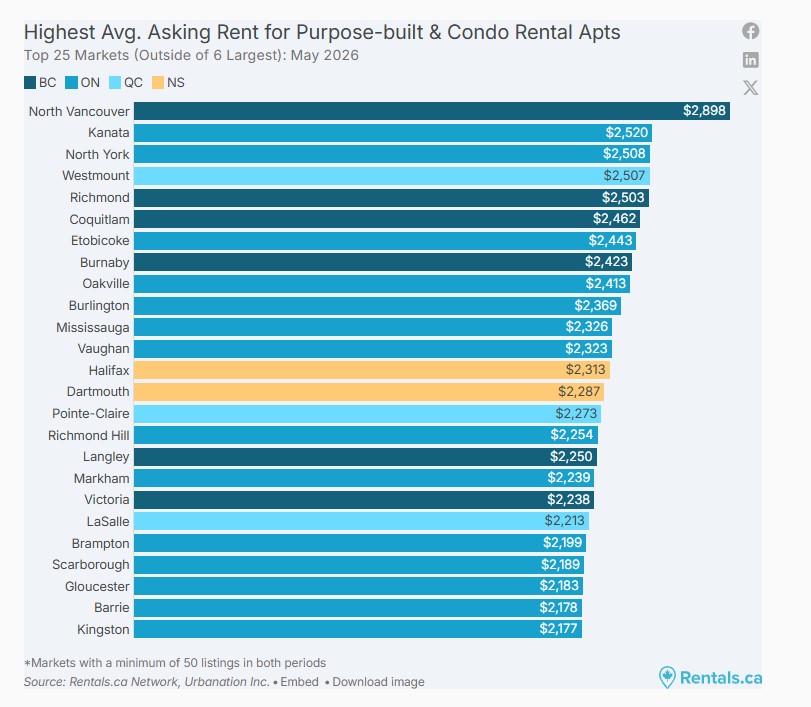
Meanwhile, every single one of the nine most expensive mid-sized markets in Canada was in Ontario or Quebec. Brossard, the cheapest of that group, averaged $1,921 — $640 more per month than Fort McMurray.
Every Alberta city in the May 2026 data
Here is the full Alberta breakdown from cheapest to most expensive, all purpose-built and condo rental apartments:
Fort McMurray: $1,281.
Lloydminster: $1,287.
Medicine Hat: $1,321.
Red Deer: $1,389.
Grande Prairie: $1,427.
Lethbridge: $1,448.
Airdrie: $1,675.
St. Albert: $1,680.
Including Edmonton and Calgary, Alberta's provincial one-bedroom average was $1,421 per month in May 2026. Two-bedrooms averaged $1,754. Both were down close to four percent compared to May 2025. The Alberta all-housing-types average was $1,766 per month. The national all-housing-types average was $2,029.
What these numbers actually measure
The Rentals.ca data covers purpose-built and condo rental apartments only. Purpose-built buildings are traditional rentals where every unit is rented out by the building owner. Condo rentals are privately owned units in condo buildings rented out by individual investors.
The data does not include single-family houses, townhouses, basement suites, or shared rooms. Every Alberta city has a significant secondary suite market — particularly Edmonton, Calgary, and smaller centres where basement suites are common. If you are renting a basement suite or shared accommodation, your actual cost is likely below these numbers. These figures represent the formal apartment market.
Why Alberta keeps landing on this list
Three things explain it. None of them are complicated.
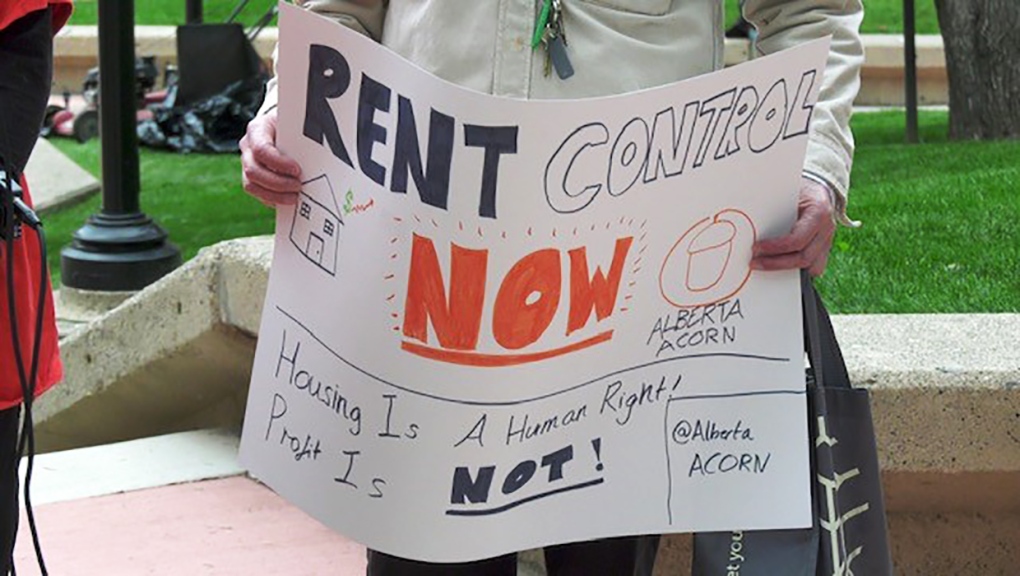
First, Alberta has no rent control. Landlords can raise rents between tenancies without a government-set cap. Critics argue this exposes tenants to sudden large increases and they are right that it can. But it also means developers are more willing to build new rental supply because they are not locked into below-market rates indefinitely. More supply means more competition for tenants. Alberta and Saskatchewan are the two provinces without rent control, and they consistently produce the most affordable urban rental markets in Canada outside of the Prairies. That relationship is real even if the causation debate is ongoing.
Second, land is cheaper. Alberta cities have room to grow outward. Calgary and Edmonton can build new suburbs. Lloydminster and Fort McMurray are not hemmed in by geography. Lower land costs mean lower development costs mean lower rents — at least at the entry level.

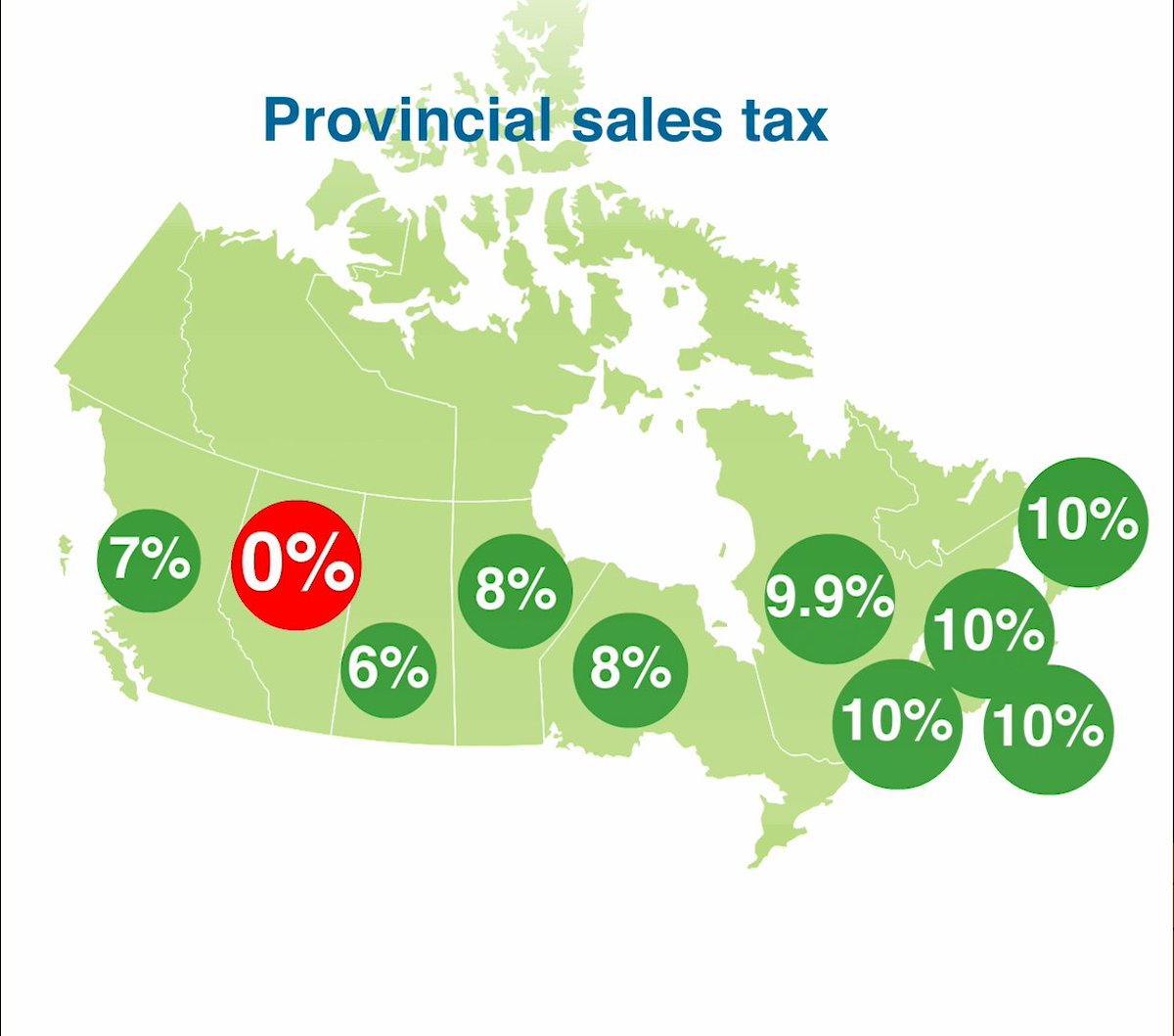
Third, no provincial sales tax. Alberta is the only major province without a PST. That reduces the cost of living broadly and makes the province a consistent destination for people leaving Ontario and BC which drives interprovincial migration into Alberta and supports rental demand without the extreme supply shortfall seen in Vancouver or Toronto.
The no-rent-control debate
It is worth noting this is not a settled argument.
Advocates for rent control in Alberta point out that between February 2022 and March 2023, the average one-bedroom in Alberta jumped from $1,074 to $1,272 — nearly 20 percent in just over a year. That is exactly the kind of increase rent control is designed to prevent. The University of Alberta Students' Union and housing advocates have argued that without vacancy control, landlords can simply wait out tenants and reset rents on turnover, which is what happened in 2022 and 2023.
The counterargument is that Alberta's rents, even at their 2023 peak, remained well below BC and Ontario. And the data supports the fact that supply increases over the past 18 months have pushed rents back down across the province.
Both things are true. Alberta is genuinely affordable by Canadian standards and Alberta renters can still face sudden large increases with little protection. Those two facts coexist.
How far apart Alberta and the rest are
North Vancouver averaged $2,898 in May 2026 the most expensive rental market in Canada outside the six largest cities. Fort McMurray at $1,281 costs less than half of that. Even Airdrie at $1,675 the most expensive Alberta city in this analysis costs $1,223 per month less than North Vancouver. Over a year that is $14,676.
The cheapest city on the expensive list Kingston, Ontario at $2,177 costs $896 more per month than Lethbridge. $10,752 more per year.
What the income picture looks like
Using the standard threshold of spending no more than 30 percent of gross income on rent, here is roughly what annual income you need to comfortably afford an apartment in each Alberta city based on May 2026 averages:
Fort McMurray at $1,281: approximately $51,240 per year.
Medicine Hat at $1,321: approximately $52,840 per year.
Lethbridge at $1,448: approximately $57,920 per year.
Airdrie at $1,675: approximately $67,000 per year.
For comparison, a renter in North Vancouver at $2,898 needs to earn approximately $115,920 per year to stay under that 30 percent threshold. A one-bedroom in Kanata, Ontario at $2,520 requires roughly $100,800.
Alberta's income requirements for rental affordability are simply lower than anywhere else in the country with comparable city infrastructure and services.
Sources:
Rentals.ca and Urbanation, National Rent Report June 2026 — May 2026 data (rentals.ca/national-rent-report)
Lethbridge News Now, Average rental prices in Alberta's secondary cities continue to lead the country, June 8, 2026 (lethbridgenewsnow.com)
CMHC, Rental Market Report October 2025 (cmhc-schl.gc.ca)
Alberta Views, Should We Have More Rent Controls, November 2025 (albertaviews.ca)





Comments
Conversation