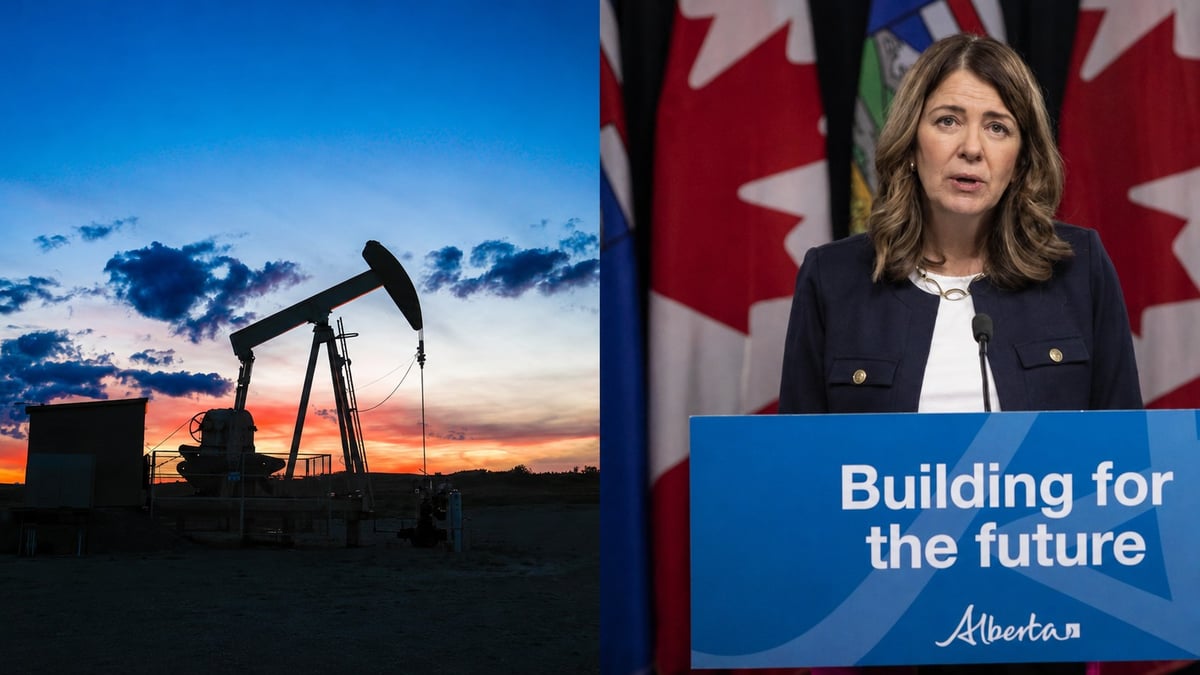
Alberta now forecasts a $2-billion surplus this year.
In February it projected a $9.4-billion deficit. That's an $11-billion swing in six months, driven primarily by substantially higher oil prices.
Finance Minister Jason Nixon is not treating it as found money.
"We know things can change and we cannot mistake a temporary windfall for a permanent trend," he told reporters Thursday, saying the turnaround is not a blank cheque for program spending.
He was also candid about the mood. "How can you not be in a good mood to stand up here and announce a $2-billion surplus and an over $11-billion swing in the fortunes of our province?" he said, before adding: "I know how quick it changes."
What changed since February
The February budget was built on a benchmark oil price of $60.50 US per barrel.
The conflict between the United States, Israel and Iran began shortly afterward, producing a prolonged squeeze on tanker access through the Strait of Hormuz.
Oil has averaged roughly $88 US per barrel in the months since, by the province's estimate.
For every $1 US change in the per-barrel price, Alberta's bottom line moves by $680 million. Rising prices lift royalties, and they lift personal and corporate tax revenue with them.
The revised forecast assumes the conflict eases and prices fall substantially, averaging $73.50 US across the April-to-March fiscal year. If prices instead hold near current levels, the surplus could grow by several billion more.
The same rise erased a previously projected $4.1-billion deficit for 2025-26. Nixon's department is still finalizing the annual report, with year-end figures expected later this year.
Premier Danielle Smith says Alberta is on track for a sixth consecutive surplus, with the Heritage Savings Trust Fund on pace to reach $35 billion in 2027.
What February's budget actually did
Budget 2026 wasn't austerity. Total spending and capital investment both grew, with health expenses up six per cent and education up 8.1 per cent, driven by population growth and public sector compensation settlements.
But the province tightened in specific places, and those places had names.
Continuing care fees rose two per cent on daily charges for residents of care homes.
Apprenticeship and trade exam and certification fees were increased to $150.
The Film and Television Tax Credit was set at $60 million for the year, a reduction of $35 million.
Contingencies were lowered to $2 billion annually, down from $3.3 billion set aside for 2026-27 and $3.7 billion for 2027-28 to handle potential tariff impacts and compensation pressures.
Analysts described the approach as redesigning programs, reallocating resources and tightening eligibility at the margins rather than shrinking the state.
The budget also broke the province's own fiscal restraint laws in at least two ways, which officials acknowledged at the time. Then finance minister Nate Horner said it bothered him more than anyone.
Nixon has not announced any reversal of the February measures.
A different minister is delivering the good news
Budget 2026 was tabled by Nate Horner on February 26. Thursday's update was delivered by Jason Nixon.
Horner defended a budget that broke fiscal restraint legislation and projected three consecutive years of red ink. Nixon announced an $11-billion improvement to it six months later, without having tabled it.
Smith thanked Nixon and his team publicly for what she described as the discipline and hard work behind the numbers.
What the Opposition said in February
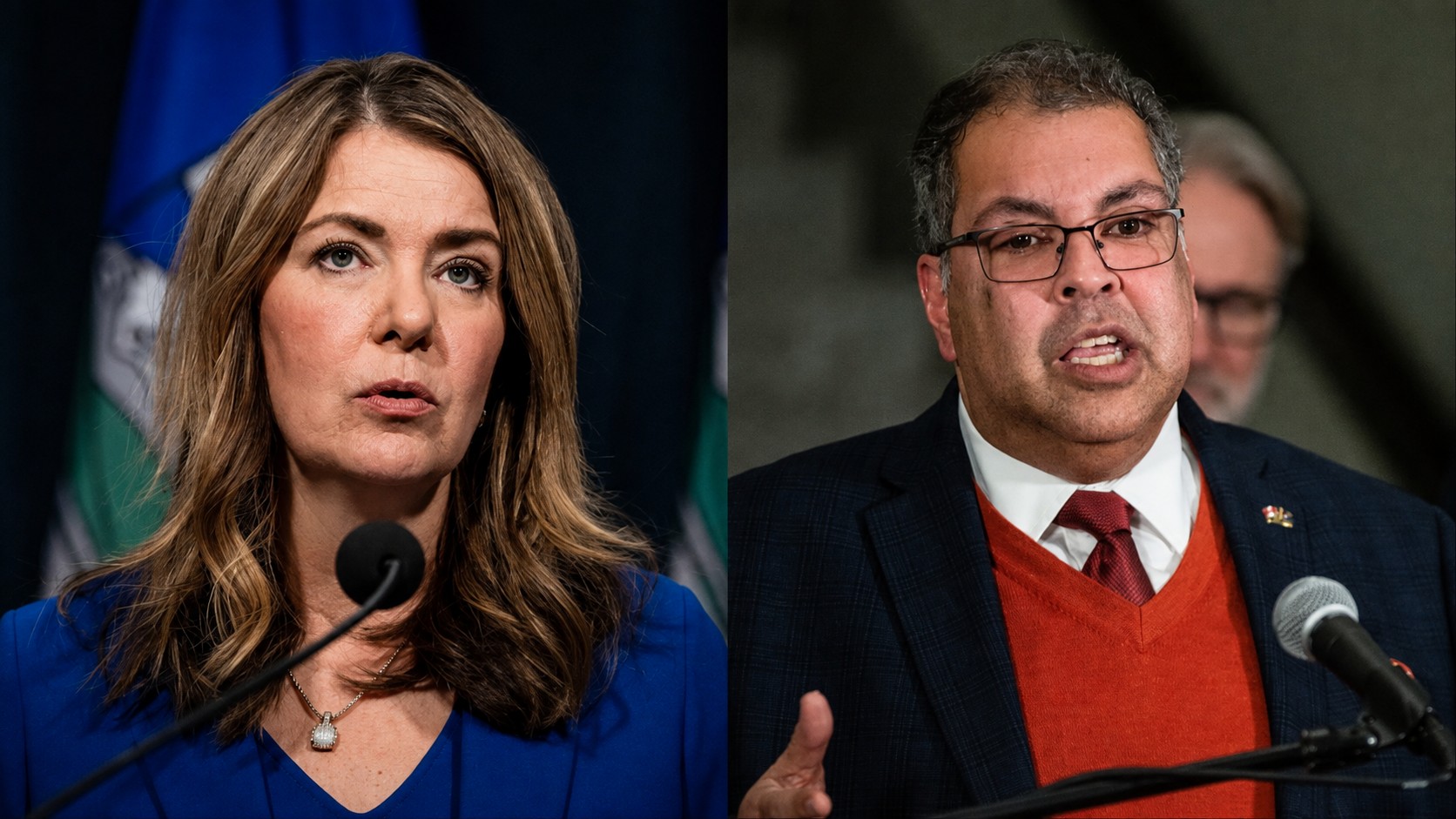
NDP Leader Naheed Nenshi argued the planned cuts and fees hurt some of the most vulnerable Albertans, citing the continuing care increase and the apprenticeship fee hike specifically.
He also pointed to what he characterized as waste elsewhere in government, including the province's attempt to privatize lab testing services, added health system bureaucracy, and downtown arena infrastructure deals.
Alberta's auditor general found separately that the failed lab privatization wasted more than $100 million.
The surplus doesn't go where you'd expect
Despite the forecast, Nixon said Alberta won't have money to direct into extra debt repayment or into the Heritage Fund, citing financial obligations and accounting rules.
Taxpayer-supported debt sits at $94.8 billion, down $14.1 billion from February's budget, largely because of the oil turnaround.
Where new money might go, according to Nixon: relief for businesses affected by U.S. tariffs or Canadian counter-tariffs, or another round of energy rebates.
Most eligible Albertans have not applied for the rebate
The province declined to cut its 13-cent-a-litre fuel tax this year, as Ottawa did and as Alberta itself did during the 2022 price shock. It offered the $100-per-adult Alberta Energy Rebate instead, which Nixon said gets money into Albertans' pockets more directly.
Nixon reported that 1.2 million Albertans have applied, out of 3.4 million eligible.
He acknowledged the gap is largely due to an onerous online application process, and said Alberta Finance will work with the Canada Revenue Agency on better systems integration for any future rebate program.
Worth knowing before you assume you've missed out: some Albertans are enrolled automatically rather than through the application, including recipients of AISH, ADAP, Income Support and the Alberta Seniors Benefit. If you're in one of those categories, check your payment record rather than the application portal.
What this means if you're waiting on something
Three things follow from Thursday's update, and none of them are commitments.
Tariff relief for business is one of two areas Nixon named for potential new spending. Canada's counter-tariffs on roughly 700 American products take effect September 8, covering steel and aluminum, dairy, appliances, agricultural equipment, pulp and paper and electronics. Ottawa has its own $7.5-billion support package. Whether Alberta adds to it hasn't been decided.
Another energy rebate is the second. Nixon's comments about improving the application process suggest a future program would be built differently, but nothing has been announced.
The February measures remain as tabled. If you're a continuing care resident paying two per cent more, or an apprentice paying $150 for an exam, nothing about Thursday's forecast changes that.
The province's next full accounting comes with the annual report later this year.
The number that explains Alberta's budget
$680 million per dollar of oil.
The update demonstrates how quickly Alberta's finances can move with commodity prices, and why decisions made under February's deficit forecast deserve another look now that the province is forecasting a surplus.
It works the other way too, which is the entire basis of Nixon's caution.
Sources
Alberta Finance, first-quarter fiscal update, August 27, 2026
Budget documents — Government of Alberta
Alberta Energy Rebate — Government of Alberta
Premier Danielle Smith, public statement
Nixon's and Horner's remarks, and Nenshi's response to Budget 2026, as reported by CBC News and Global News.





Comments
Conversation