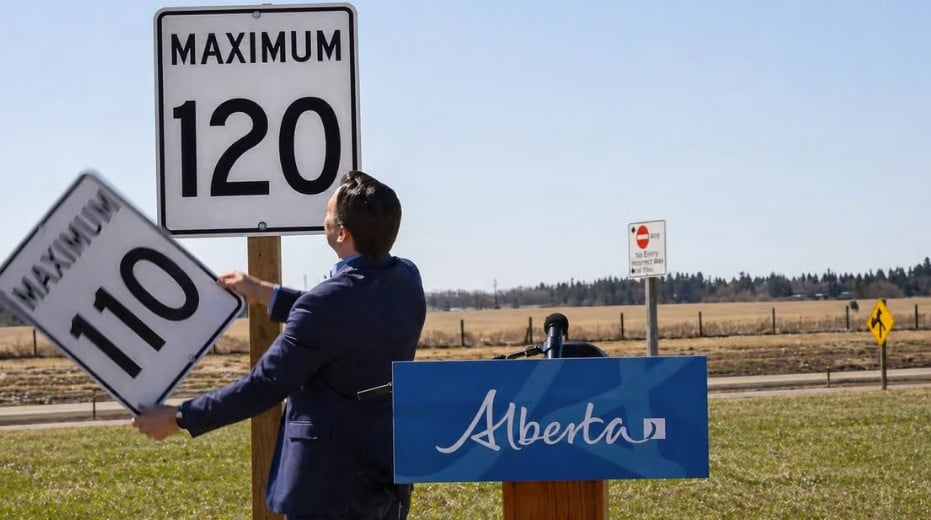
Collisions in Alberta's 120 km/h pilot zone south of Leduc are down 17 per cent.
RCMP traffic services analyst Jaimy Black said 71 collisions occurred in the zone between May 5 and July 27 this year. Last year, over the equivalent window from May 4 to July 26, there were 85.
Police issued 434 tickets in the zone this year, about 16 per cent fewer than the year before.
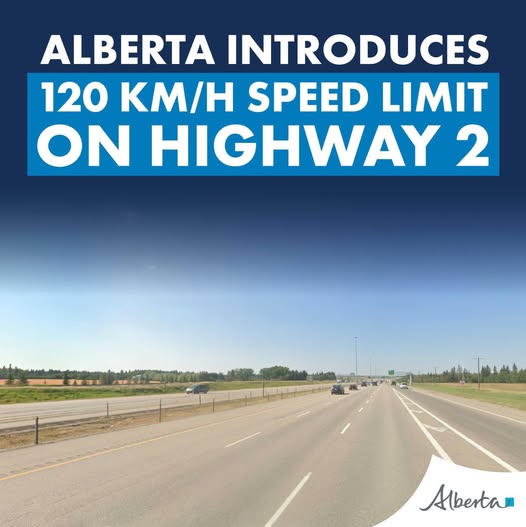
The number that explains it
A spokesperson for the Ministry of Transportation and Economic Corridors told CBC News that between May 29 and July 29, the average speed recorded in the pilot zone was 119.6 km/h.
Four-tenths under the posted limit.
That's the whole argument for the pilot, confirmed. Transportation Minister Devin Dreeshen made exactly this case when the zone went live on April 29.
"Collisions, that's something that we don't obviously anticipate because the vast majority of people on Highway 2 are going 120 or faster already," Dreeshen said at the time. "So we don't think that's going to be a scary metric that will move."
It moved. Downward.
Our coverage from launch day is here.
What's being measured
The pilot covers a 22-kilometre stretch of Highway 2 south of Leduc, with the northern edge near the Leduc Commercial Vehicle Inspection Station. The limit went from 110 to 120 on April 29.
The province is monitoring the zone plus five kilometres before and after it, tracking average, high and low driving speeds, collision type and severity, driver experience, and calls for emergency services.
Sensors are in the ground. The zone falls under Leduc RCMP and Ponoka RCMP jurisdiction.
Why the ticket number needs a caveat
Black was careful about the 16 per cent drop in tickets.
Ticket volumes can be influenced by staffing levels, proactive enforcement, weather, road conditions, construction, special events and traffic volumes, she said.
In other words, fewer tickets doesn't necessarily mean fewer people speeding. It can mean fewer officers out looking.
The collision number is the more reliable of the two, because a collision gets reported whether or not anyone was watching.
It's still three months of data
This is where the enthusiasm should slow down.
Three months on one stretch of one highway, in summer, is not a finding. It's a signal.
Alberta winters are the variable nobody has tested yet. The pilot has not run through a single snowfall, and the corridor south of Leduc gets fog, black ice and blowing snow that change the calculation entirely.
Collision counts also fluctuate year to year for reasons that have nothing to do with speed limits. A 14-collision difference over 12 weeks is not a large sample.
Critics have said it's too soon to draw conclusions, and on the numbers available, they're right.
B.C. tried this and pulled it back
Alberta isn't the first province to raise limits to 120.
British Columbia did it in 2014 on 33 rural corridors after a provincial speed review, introducing Canada's first 120 km/h zones on the Coquihalla, the Okanagan Connector and the Island Highway.
Crash data then pushed the province the other way. In November 2018, B.C. rolled back 15 sections covering roughly 570 kilometres by 10 km/h.
The Coquihalla was the exception. Its safety record held up, and the Hope to Kamloops section remains the only 120 km/h road in the country outside Alberta's pilot.
That's a four-year arc. Alberta is three months in.
The industry warning
Ron Glen of the Alberta Roadbuilders and Heavy Construction Association raised a specific concern when the pilot launched: that drivers already travelling 125 would simply move up.
The 119.6 average doesn't fully answer that. An average includes everyone, and the province is also tracking high and low speeds, which it hasn't released.
The relevant question isn't what the average driver does. It's what the fastest ten per cent do.
Leduc has asked for the opposite
Worth knowing, because it's the same highway.
In 2023, Leduc city council voted unanimously to ask the province to lower the QEII speed limit through city limits, from 110 to 80, on the stretch from Airport Road past Highway 2A.
The reason was the collision rate. City administration told council that between 2018 and 2019, the rate on that section was 101.4 per hundred million vehicle kilometres, against a provincial average of 49 for divided highways.
Roughly double.
That's a different section from the pilot zone, and the pilot corridor received infrastructure upgrades beforehand including longer ramps and repaving. But it's the same highway through the same area, and it shows how much a specific stretch matters to the outcome.
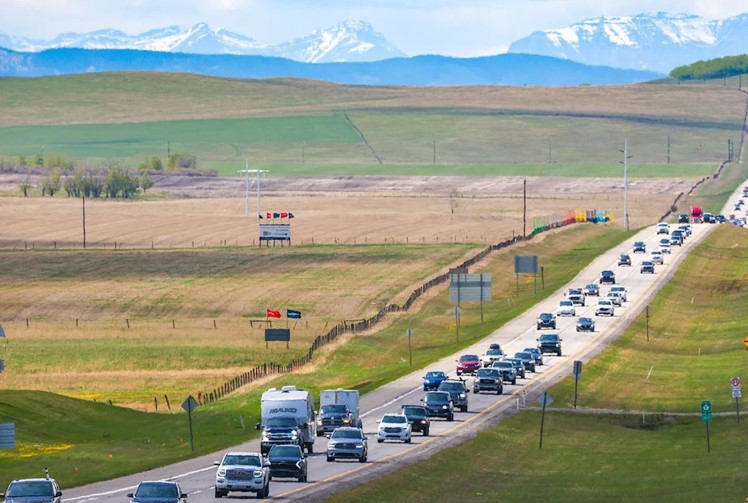
What happens next
The province hasn't given an end date for the pilot, and Dreeshen hasn't offered a timeline for expanding 120 km/h limits elsewhere.
He has said the Highway 2 pilot is a first step and that the province wants to review the data before making decisions about other divided highways.
A provincial survey in late fall 2025 found nearly 70 per cent of Albertans supported raising rural divided highway speeds to 120.
The winter data is the one worth waiting for.
Sources
Ministry of Transportation and Economic Corridors RCMP traffic services
Collision, ticket and average speed figures, and comments from RCMP analyst Jaimy Black, as reported by CBC News. Comments from Minister Devin Dreeshen and Ron Glen as reported at the pilot's launch. Leduc council's 2023 request as reported by Global News. B.C. rollback details from provincial records.







Comments
Conversation