
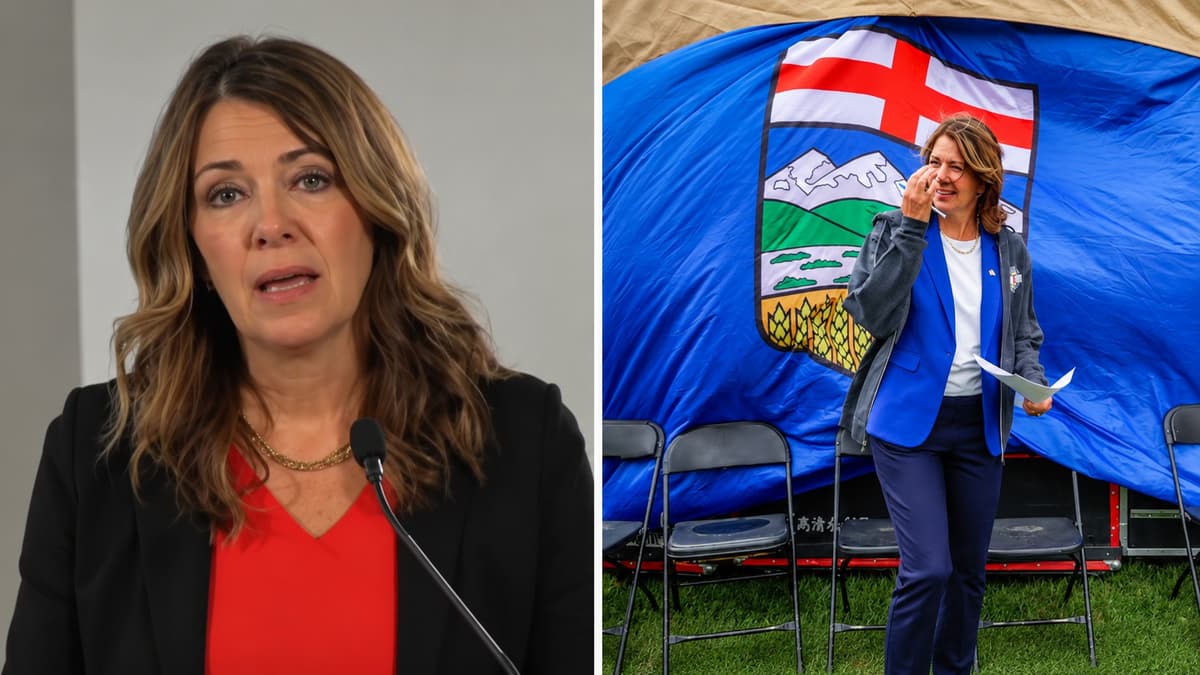
Premier Danielle Smith was asked whether she was prepared to start decertifying diploma mills in Alberta.
She didn't accept the premise.
"I wouldn't describe Portage College as a diploma mill," she said. "There have been instances where I think unscrupulous operators have set up diploma granting programs and taken advantage of students. I think perhaps Portage maybe overstated the pathway to permanent residency, but our view is that if you come here as an international student and your visa expires and you don't have permanent residency, you need to go home."
She added that where students have skills Alberta needs, the province should be positioned to offer a pathway to permanent residency.
Smith's position
In a written statement, Smith framed it this way: a student visa is a temporary document to study in Canada, and that was always understood.
Universities and colleges were built by Alberta taxpayers, first and foremost for Alberta students, she said. Where there is room for international students, the terms are simple. Earn your education, then return home to build a life with it.
Rules are what make a fair system fair, she said, and the country needs to return to an immigration process that respects the rules.
The students say they aren't asking to stay permanently
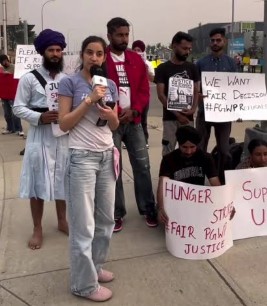
More than 450 international students say their post-graduation work permit applications were wrongfully refused. They have been protesting in Calgary, and some entered a hunger strike.
"Nobody is asking for permanent residency," organizer Jaskirat Kaur told LiveWire Calgary. "We're asking for the opportunity to get Canadian experience through the work permit."
Protesters told the outlet that neither Smith's comments nor the federal response addresses their central complaint: graduates of the same programs are getting different decisions on their applications, under rules that Immigration, Refugees and Citizenship Canada says have not changed.
What a post-graduation work permit actually is
This is the distinction the whole dispute turns on, and most coverage skips it.
A post-graduation work permit is a temporary open work permit for people who finish an eligible program at a designated learning institution in Canada. It is not permanent residency. It does not grant permanent residency.
It lets a graduate work in Canada for a set period, then it expires. That work experience can later strengthen an application under certain immigration streams, but the permit itself is a temporary document with an end date.
Eligibility depends on the institution, the program length, and whether the field of study appears on a list IRCC maintains. Those requirements have been tightened repeatedly over the past two years.
So the students are applying for a temporary permit. The political answer has been about permanent residency. Both statements can be accurate and still not meet.
Who decides this
Not Alberta.
Post-graduation work permits are federal. The province does not issue them, refuse them, or set the eligibility rules. Any student whose application was refused was refused by IRCC.
Prime Minister Mark Carney has said the process must be followed. Reporting indicates he was unaware of the hunger strike when asked about it.
What Alberta does control is nominations for permanent residency under the Alberta Advantage Immigration Program, within an annual allocation Ottawa sets. Smith has argued the province needs greater authority to select immigrants whose skills match Alberta's labour shortages. Acting on that would require a federal agreement.
Portage College isn't a private operator
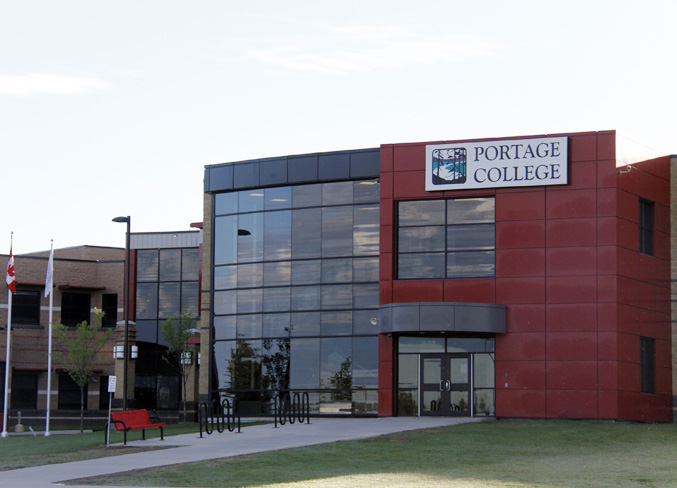
Portage College is a public, board-governed community college in Lac La Biche, established in 1968, with seven campuses across northeastern Alberta. It enrolled roughly 1,615 full-time equivalent students in 2023-24 and offers more than 30 certificate and diploma programs, including trades, practical nursing, culinary arts, and Indigenous arts and culture.
That's why the diploma mill framing got pushed back. The term usually describes unaccredited private operators selling credentials with minimal instruction. A public college governed by a provincially appointed board is a different category of institution.
Smith's actual criticism was narrower. She said Portage may have overstated the pathway to permanent residency for its international graduates. The college has not publicly responded to that.
Alberta has seen this before
The pattern isn't new here.
In 2017, students who paid thousands of dollars to attend a private Edmonton college launched legal action, saying they were told the program would qualify them for a federal post-graduate work permit and it didn't. One lead plaintiff, Edeline Agoncillo, said an immigration consultant advised her to enrol and made the process sound easy.
Advocates at the time said that as rules tightened for temporary foreign workers, people began treating the international student stream as a route to permanent residency instead.
That history is part of why "diploma mill" is a live term in Alberta politics, and part of why Smith drew a line between private operators and a public college.
What's still unresolved
Whether IRCC reviews the refusals. Whether affected students pursue legal remedies. Whether Ottawa and Alberta reach any agreement on the province's immigration authority.
None of those has a timeline attached.
Sources
Premier Danielle Smith, press conference remarks and written statement Immigration, Refugees and Citizenship Canada, post-graduation work permit eligibility Portage College institutional information Government of Alberta, Alberta Advantage Immigration Program
Protest details and comments from Jaskirat Kaur as reported by LiveWire Calgary. The 2017 legal action as reported by CBC News.








Comments
Conversation