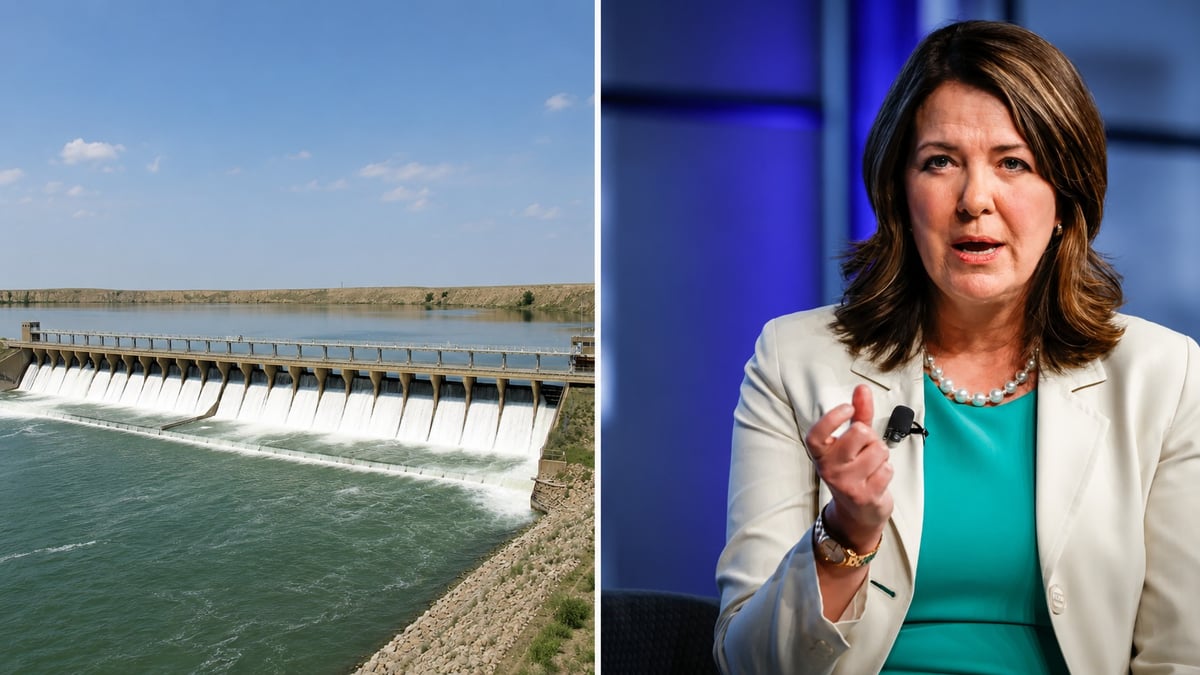
Alberta's water is in the north. Its demand is in the south, and the province is actively recruiting an industry that needs a lot of it.
Alberta announced Thursday it is commissioning a white paper on securing its water supply over the next 100 years, with $400,000 allocated and a spring 2027 deadline.
The province's release cites population, communities, industry and the agri-food sector. It does not mention data centres.
What was announced
Environment and Protected Areas has issued a request for proposals for a white paper examining Alberta's long-term water security.
The money comes from the 2026-27 Technology Innovation and Emissions Reduction Regulation water-availability budget.
"Water is the foundation of Alberta's future," said Environment Minister Grant Hunter. "We're looking 100 years ahead and asking what Alberta needs to build, invest in and do differently today to secure our water supply for generations to come."
The paper will examine new or expanded water storage and conveyance infrastructure, better use of groundwater, stronger measurement and reporting, advanced modelling and forecasting, and policy tools for managing and moving water. It will also look at potential partnerships and funding models for delivering major projects.
The part the news release left out
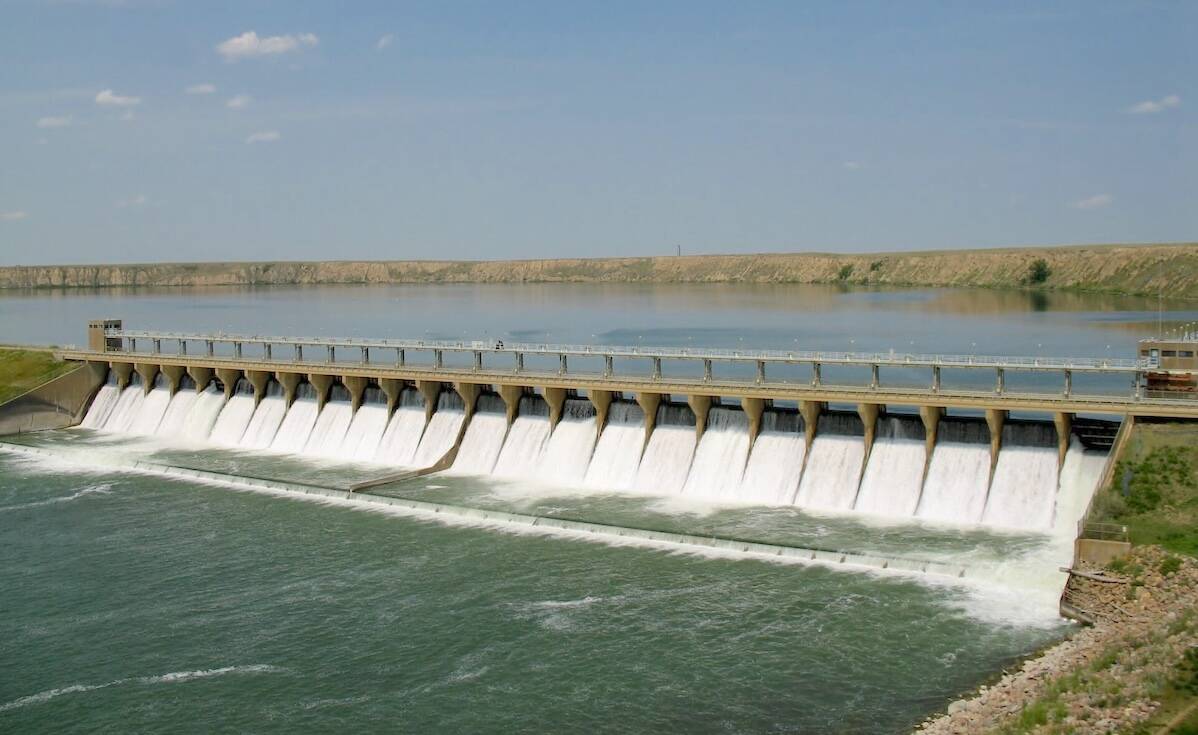
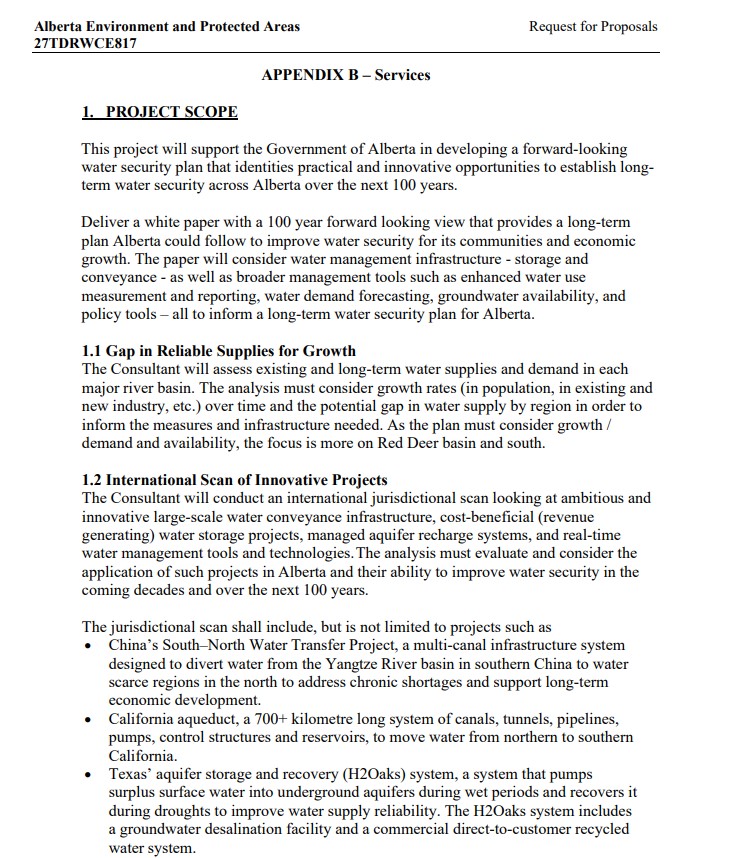
According to the request for proposals, the eventual contractor will be asked to review major water transfer projects internationally, including the California Aqueduct and China's South-North Water Transfer Project, and analyze whether Alberta could do something comparable.
Both are engineering systems built to channel water hundreds of kilometres from water-rich regions to arid or demand-heavy ones. California's runs much of the length of the state. China's is among the largest infrastructure projects ever built.
The RFP is direct about the problem that's meant to solve. Much of Alberta's available water supply sits in the north, while southern river basins including the Bow, Oldman and South Saskatchewan have been closed to new water diversion licences for close to two decades.
It also notes Alberta faces cross-jurisdictional limits on basins shared with Saskatchewan and the United States.
"There is a need to assess, plan and act to ensure population and economic growth in southern Alberta is not constrained by limited water supply but rather matched with reliable water supplies," the document says.
Where data centres fit
The province didn't connect the two, but the timing is hard to miss.
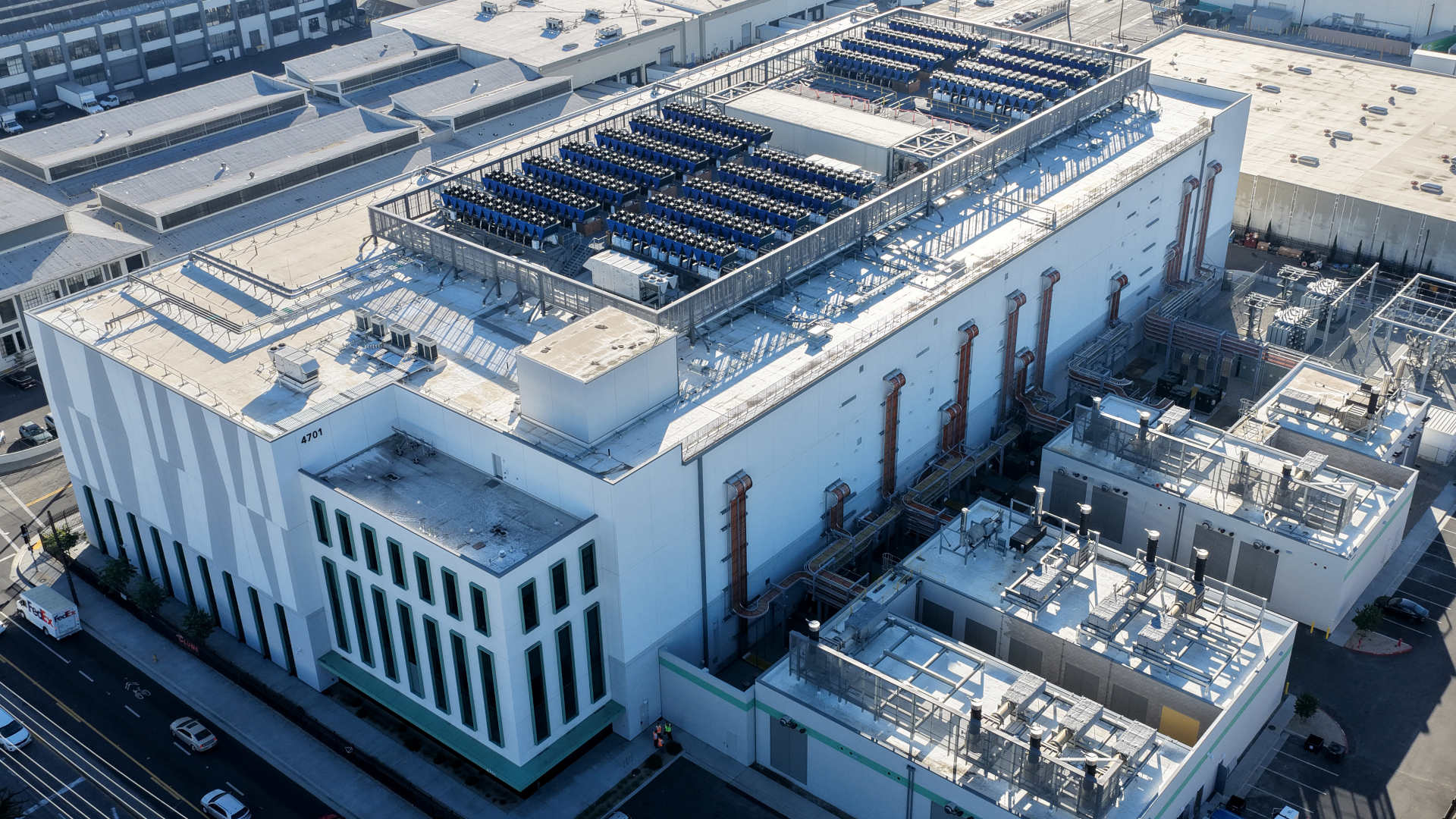
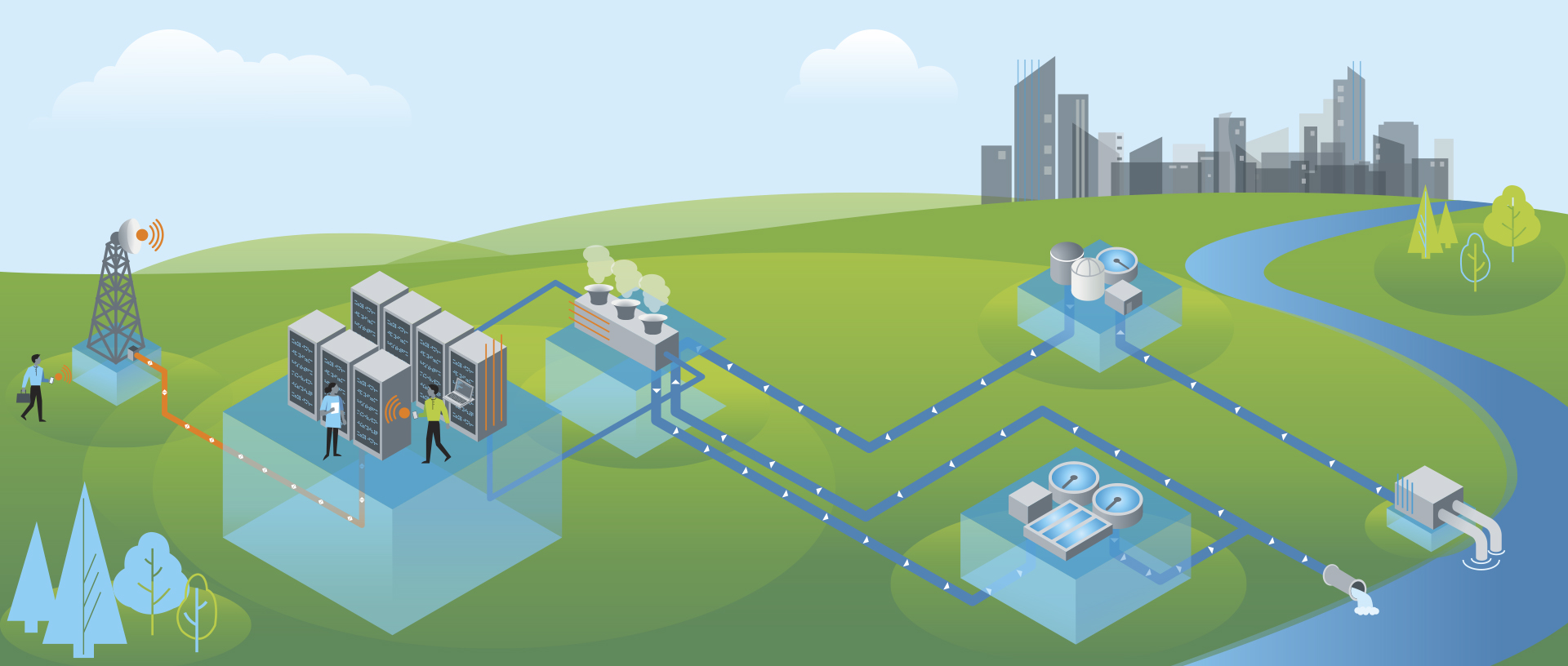
Alberta is actively recruiting AI data centre investment, and many such facilities use substantial water for cooling. Premier Danielle Smith and Meta announced last month that Meta will build its first Canadian data centre north of Edmonton. Both have said it will use a closed-loop water system, using far less water than a conventional facility.
Water is also one of the questions residents have raised at the province's data centre town halls, which run through August and September, including one in Grande Prairie on September 11.
The white paper covers a 100-year horizon and every major water user in the province. Data centres are one of them, whether or not the release names them.
What the study won't touch
The province's release lists specific commitments the white paper will not review.
FITFIR stays. Alberta's priority system for licensed water allocations, based on first in time, first in right, is not under examination. That's the rule giving older licences priority over newer ones in a shortage, and it's what irrigators and municipalities plan around.
Also untouched: the ability to transfer water licences in basins with approved management plans, and the existing approval routes for inter-basin transfers, which require a special act of the legislature, a minister's approval for lower-risk transfers, or cabinet in emergencies.
The province says ideas identified in the paper will not automatically proceed, and any potential project would still require detailed technical assessment first.
Why now
Three pressures line up.
Drought. Alberta saw severe droughts in 2021 and 2023, and southern basins have been closed to new licences since roughly 2006. Much of the province is having a wet summer, and Edmonton broke its summer rainfall record before August began, but a wet year doesn't reopen a closed basin.
Growth. The province cites population, communities, industry and the agri-food sector all expanding.
Industrial demand. Beyond data centres, irrigation remains Alberta's largest single licensed water user, and the southern basins where irrigation is concentrated are the ones already closed.
Two modelling projects are already underway
Separate from the white paper, Alberta has two contracts running.
Kerr Wood Leidal Associates Ltd. is developing a watershed-scale water-demand forecasting model for the South Saskatchewan River Basin, covering municipal, irrigation, livestock, industrial and commercial use.
Aquanty Inc. is operationalizing existing HydroGeoSphere models for the Peace and Athabasca basins, supporting near-real-time, short-term and seasonal forecasting in northern Alberta.
Both are expected to be complete by March 2027.
What Albertans already said
The province's 2024-25 water-availability engagement found interest in natural solutions, new large-scale reservoirs and smaller community-oriented storage.
It also found differing views on inter-basin conveyance and large engineered storage. Which is the careful way of saying moving water between basins is contested, and the white paper is going to raise it again.
Alberta says it will work with local governments, Indigenous communities and organizations, industry associations and Albertans as the work proceeds. The release states the paper will respect transboundary water obligations, Indigenous perspectives and treaty rights, and jurisdictional authority.
Agriculture and Irrigation Minister Tara Sawyer described the work as the start of an important conversation about how Alberta meets its future water needs. Transportation Minister Devin Dreeshen framed it as planning for the water needs of growing communities.
What this is and isn't
$400,000 buys a study. It doesn't build anything.
The white paper is a scoping exercise meant to produce options, and the province has said explicitly that nothing in it proceeds automatically. The decisions that would matter, on infrastructure, funding and whether any inter-basin transfer is ever proposed, come after spring 2027 if they come at all.
Two things to watch: who wins the contract, and what the finished paper recommends.
Sources
Securing Alberta's water future for next 100 years — Government of Alberta, August 13, 2026
Government of Alberta, request for proposals
RFP contents and the international project comparisons as reported by The Canadian Press.





Comments
Conversation