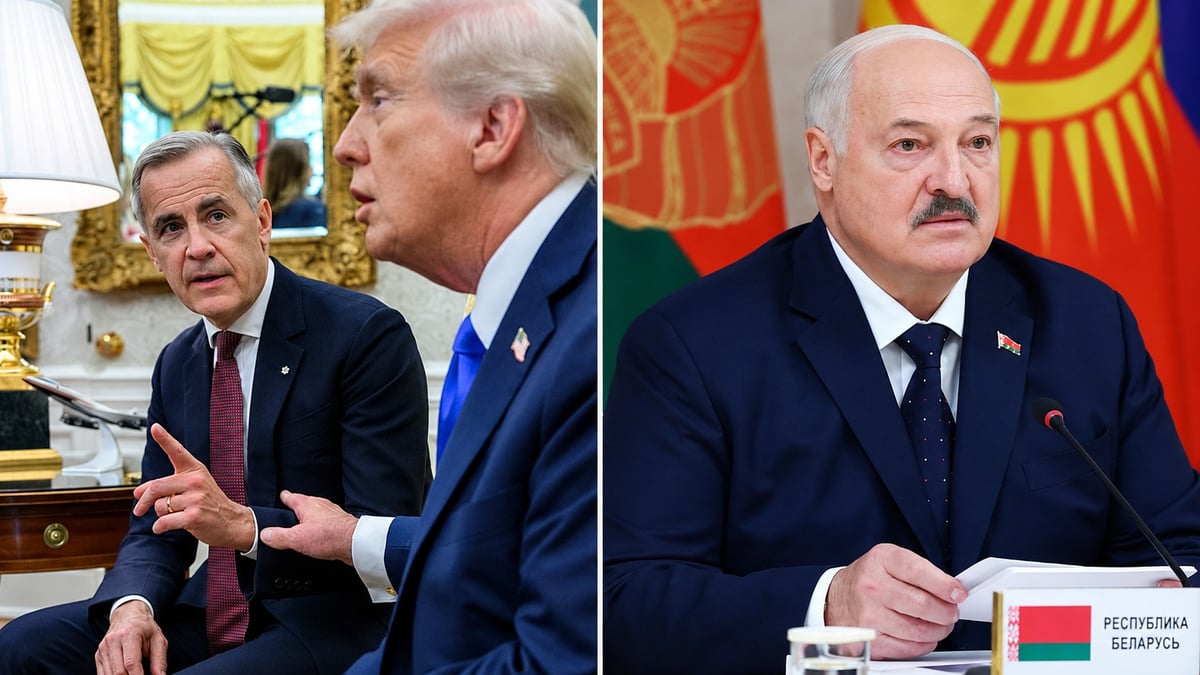
Donald Trump says the United States is working on a "massive" deal to buy potash from Belarus at prices substantially below what it pays Canada.
Belarus says it doesn't have much to spare.
President Alexander Lukashenko said his country's production is already under contract, and there isn't enough uncommitted supply for a major push into Western markets.
"Even if we wanted to supply potash to other Western markets, we simply don't have those volumes. Everything is already under contract," Lukashenko said Tuesday.
He also confirmed Belarusian exports to the U.S. are resuming, according to Reuters. The question isn't whether Belarus can sell any potash to Americans. It's how much.
That matters because the United States gets 79 per cent of its imported potash from Canada. Belarus supplies 3 per cent.
What Trump announced
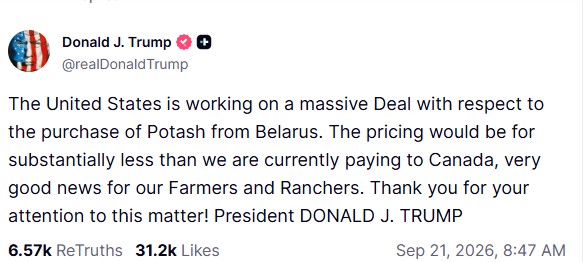
Trump posted the plan on Truth Social on Monday, September 21.
"The United States is working on a massive Deal with respect to the purchase of Potash from Belarus," he wrote.
He said the price would be "substantially less" than what the U.S. pays Canada and called it good news for American farmers and ranchers.
He didn't say how much potash, at what price, or when shipments would start. It's a proposed deal, not an agreement with announced terms.
Canada supplies most of America's potash
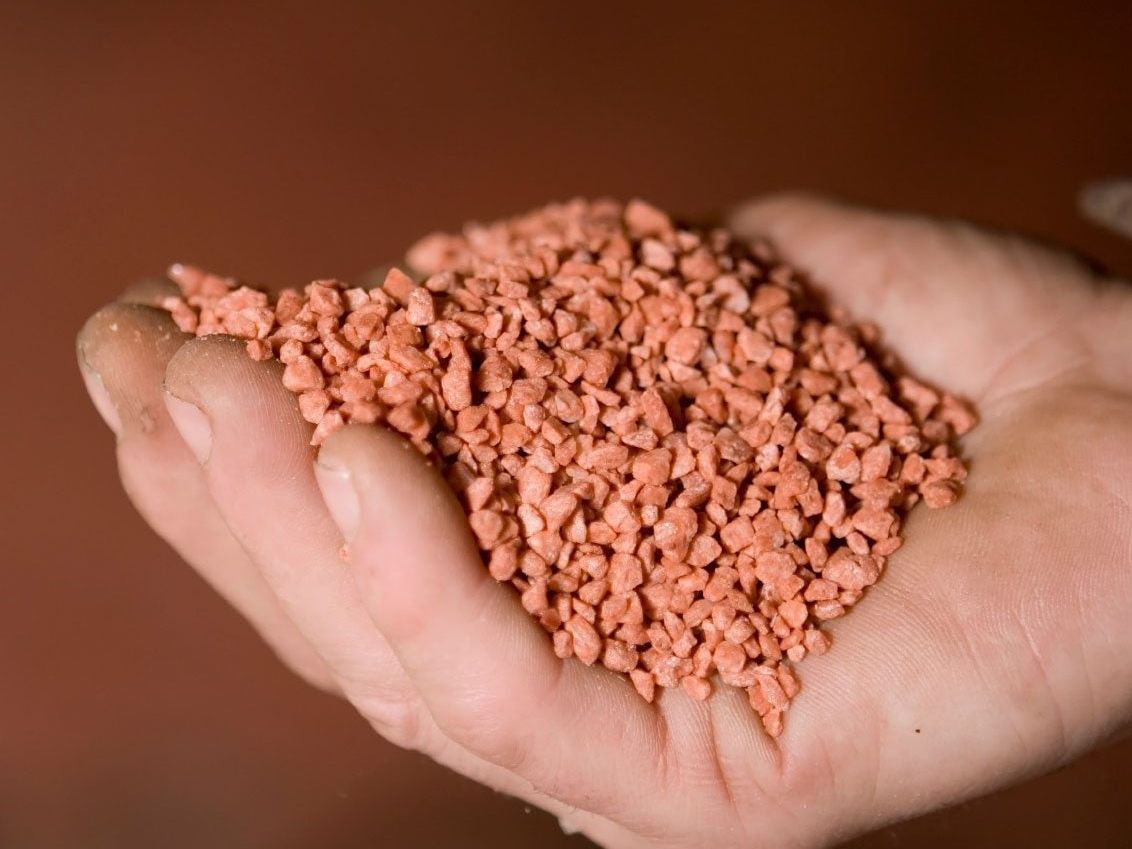
Potash provides potassium, one of the essential nutrients in fertilizer. The U.S. Geological Survey says there's no substitute for potassium as a plant nutrient. Farmers can't swap it for something else.
U.S. potash imports, according to USGS figures cited by Global News:
Canada: 79 per cent.
Russia: 11 per cent.
Belarus: 3 per cent.
Canada is the world's largest potash exporter. Natural Resources Canada says the country exported 22.9 million tonnes in 2024, nearly 39 per cent of global exports.
In 2025, Canada sold about $4.2 billion worth of potash to the United States, out of roughly $9 billion in total potash exports.
Belarus produces plenty. It's already sold.
Belarus is a major producer. The USGS says it accounted for 10.7 per cent of world potash production in 2024 and exported 6.43 million tonnes, measured in potassium-oxide equivalent. China was its biggest customer, taking 29 per cent.
So the issue isn't that Belarus doesn't mine much potash. It's how much it could redirect to the U.S. without pulling it away from customers it already has.
Pam Schwann, president of the Saskatchewan Mining Association, raised the same question before Lukashenko did.
"I'm not sure if they have any extra latent supply that they're able to ramp up production with. They have a very complicated supply chain," she told Global News.
Getting it to American farms
Saskatchewan and Belarus are both landlocked. The difference is what sits between the mine and the customer.
Saskatchewan potash already moves south on an established rail network into the U.S. Midwest.
Belarusian potash would have to reach an export port, cross the Atlantic, then move inland to farms. Schwann said Canada already has the integrated supply chain Belarus would need to build.
The first step is harder than it used to be. Reuters reports Lithuania's closure of its port to Belarusian potash has made exports more difficult.
Moe calls it "blood potash"
Saskatchewan Premier Scott Moe said more than 40 countries, including Canada and its allies, sanction Belarus for supporting Russia's invasion of Ukraine.
"Buying blood potash from Belarus is supporting Russian aggression. It's wrong and it doesn't make sense," Moe said.
"Does anyone believe Belarusian blood potash shipped through Russia is going to be more affordable, more sustainable or more ethical than potash shipped from Saskatchewan, right here in North America?"
The sanctions picture isn't uniform. The European Union still sanctions Belarus's potash sector. The Trump administration has been easing some U.S. restrictions as Washington's relationship with Minsk has shifted.
It comes in the middle of a trade fight
Canada-U.S. trade talks collapsed last month after Ottawa walked away over last-minute terms Prime Minister Mark Carney says the U.S. demanded, including limits on Canada signing new trade deals with other countries.
Since then, Trump has imposed several rounds of tariffs and import restrictions on Canadian goods. Canada's counter-tariffs took effect September 8.
Potash stands apart from most of what's been targeted. The U.S. has no domestic substitute at scale, which is why this announcement drew such a quick response from Saskatchewan.
Canada already sells most of its potash elsewhere
The U.S. is Canada's biggest single potash customer. It isn't the majority of the business.
Of roughly $9 billion in potash exports in 2025, about $4.2 billion went to the United States, according to Natural Resources Canada. The rest, close to $5 billion, went to buyers overseas.
That doesn't make the U.S. market easy to replace. It's close, it's connected by rail, and it buys in huge volumes during tight planting windows. But it does mean Saskatchewan producers aren't starting from zero if they need to push more product offshore.
Schwann said the announcement underlines that.
"Obviously the U.S. market is very important to our Saskatchewan mining companies," she told Global News. "Moving forward, it does speak to the importance of diversification of trade and the building out of trade-enabling infrastructure and diversifying markets."
Shipping more overseas runs through ports and rail capacity, which is why the federal news Schwann mentioned, on trade-enabling infrastructure, is worth watching.
Why farmers care about more than price
Fertilizer Canada said the sticker price isn't what decides whether a supplier works.
"Reliability, proximity, transportation infrastructure, product availability and the ability to deliver during critical application windows all matter," the industry group said.
Fertilizer has to be on fields during specific spring and fall windows. Cheaper potash that arrives late doesn't help a farmer.
Could Belarus replace Canada?
Nothing announced so far suggests it could at anything close to the current scale.
It doesn't have to, though, for a deal to matter. Even a modest increase in Belarusian supply could add competition and pressure on price.
A large shift would need three things at once: spare Belarusian production, an export route that can handle it, and a way to move it from U.S. ports to farms. Lukashenko's comments put the first one in doubt.
What to watch
Volume. A small Belarusian purchase is a very different thing from replacing a real share of Canada's supply.
Price. Trump's "substantially less" can't be tested until the price, the shipping costs and the quantity are known.
Ottawa. Schwann said federal news on trade diversification and trade infrastructure is expected later this week.
Sources
U.S. Geological Survey, Belarus mineral data
Natural Resources Canada, potash facts
Natural Resources Canada, mineral trade data
Donald Trump, Truth Social, September 21, 2026
Premier Scott Moe, statement, September 21, 2026
Fertilizer Canada, statement




Comments
Conversation